See What Others Don'tT +1 (800) 537 6777
See What Others Don't
Our cruise concierge team is ready to assistT +1 (800) 537 6777
Swan Hellenic
FIND YOUR CRUISE
CHARTERSPROMOTIONS
Swan Hellenic
Swan Hellenic
Swan Hellenic
FOLLOW US
InstagramYouTubeFacebookTikTokLinkedIn

Sign up for our newsletter

Design by Charmer
All pictures and videos of wildlife were taken with a professional zoom lens from a distance required under environmental laws, ensuring the safety of both the wildlife and the environment. The website (www.swanhellenic.com) is owned and operated by Swan Hellenic Travel Limited (20, Themistokli Dervi, Flat/Office 301, 1066, Nicosia, Cyprus)
© 2025 Swan Hellenic. All Rights Reserved
AECO
USTOA
CLI
ACTA
ACTA 2
IAATO
Cousteau
Virtuoso
Swan Hellenic
FOLLOW US
InstagramYouTubeFacebookTikTokLinkedIn

Sign up for our newsletter

Design by Charmer
All pictures and videos of wildlife were taken with a professional zoom lens from a distance required under environmental laws, ensuring the safety of both the wildlife and the environment. The website (www.swanhellenic.com) is owned and operated by Swan Hellenic Travel Limited (20, Themistokli Dervi, Flat/Office 301, 1066, Nicosia, Cyprus)
© 2025 Swan Hellenic. All Rights Reserved
AECO
USTOA
CLI
ACTA
ACTA 2
IAATO
Cousteau
Virtuoso

Sign up for our newsletter

FOLLOW US
InstagramYouTubeFacebookTikTokLinkedIn

Swan Hellenic
Design by Charmer
AECO
USTOA
CLI
ACTA
ACTA 2
IAATO
Virtuoso
Cousteau
All pictures and videos of wildlife were taken with a professional zoom lens from a distance required under environmental laws, ensuring the safety of both the wildlife and the environment. The website (www.swanhellenic.com) is owned and operated by Swan Hellenic Travel Limited (20, Themistokli Dervi, Flat/Office 301, 1066, Nicosia, Cyprus)
© 2025 Swan Hellenic. All Rights Reserved
Last Minute

Wild Eden of Papua New Guinea cruise

Honiara, Guadalcanal Island→Sorong, Papua
05.04.26 - 18.04.26
Last Minute

Wild Eden of Papua New Guinea cruise

Honiara, Guadalcanal Island→Sorong, Papua
05.04.26 - 18.04.26
Book now
M0826040513SH MINERVA
Ports14
Countries3
Nights13

Sail from the Solomon Islands through Papua New Guinea, then finish in Indonesian Papua. Days move between reef lagoons, volcanic coastlines, village landings, and a full day on the Sepik River. Snorkel in the Bismarck Solomon Seas and cruise into Garove’s flooded caldera. Papua New Guinea is often called the Pacific’s living Eden for its cultural and biological diversity

Cruise Plus

Perfect for travellers who like peace of mind that everything is taken care of

Price on request
Transfer
Night Hotel
Transfer
Cruise
Transfer

Sail from the Solomon Islands through Papua New Guinea, then finish in Indonesian Papua. Days move between reef lagoons, volcanic coastlines, village landings, and a full day on the Sepik River. Snorkel in the Bismarck Solomon Seas and cruise into Garove’s flooded caldera. Papua New Guinea is often called the Pacific’s living Eden for its cultural and biological diversity

M0826040513SH MINERVA
Ports14
Countries3
Nights13

Cruise Plus

Perfect for travellers who like peace of mind that everything is taken care of

Price on request
Transfer
Night Hotel
Transfer
Cruise
Transfer
Your selected stateroom
All meals onboard
Complimentary hot & cold beverages, beer, wine & spirits any time throughout your cruise
24-hour room service
Lecture programs by expedition team and guest speakers
One selected shore excursion per port of call
All expedition landings
Entry level WI-FI (upgraded packages available)
Gym, sauna, pool
24/7 self service laundry
Waterproof backpack and refillable water bottle, yours to keep
In polar regions: branded parka, yours to keep and use of rubber boot
Memory Package
Onboard gratuities & port taxes
Charter flights
Group transfers
One night pre-cruise accommodation

Day-by-Day Itinerary

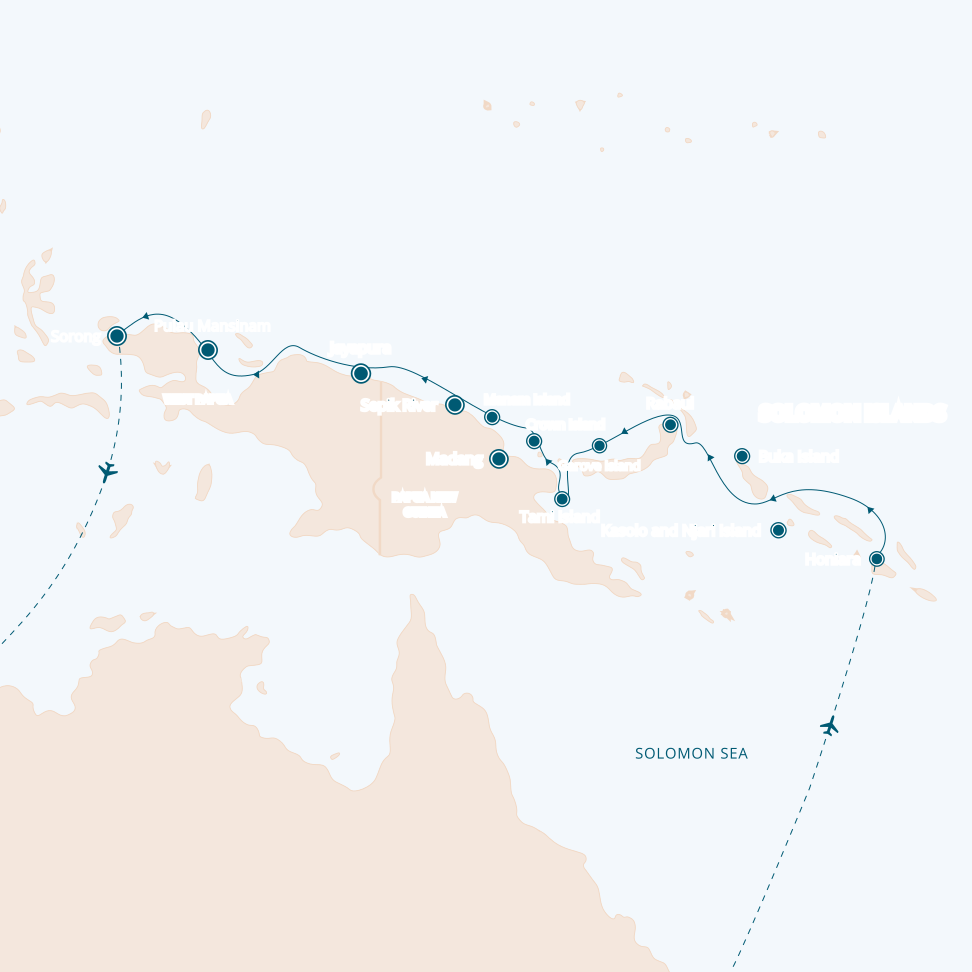
Thirteen nights aboard SH Minerva, with days that shift fast between sea and shore. One morning can be a quiet lagoon and a snorkel off the Zodiacs. The next can be a village welcome, a walk inland, or a river journey where life still moves by canoe and current

Itinerary route map

NOTE: This itinerary provides general information about each destination. Also, please be aware that some of the venues and highlights mentioned may not be open or accessible on the day we visit. For the most accurate tour program, we recommend contacting your Swan Hellenic agent or travel agent closer to your departure date.

Overview

Day 1. Honiara, Guadalcanal Island

Day image 1
The capital of the Solomon Islands, Honiara sits on the northeastern coast of Guadalcanal at the mouth of the Mataniko River. A relatively new city, it grew up around a U.S. military base during and after WWII. In 1952 it superseded Tulagi as the premier city of these islands. Honiara’s U.S. War Memorial provides a comprehensive war-history lesson of the area. Today the town is laid-back and relatively tourist free with a real-life atmosphere

Day 2. Cruising Kasolo Island (Kennedy Island)

Day image 1
Kennedy Island, (also Kasolo or Plum Pudding Island), is a tiny forested islet named after John F. Kennedy. In August 1943, after their craft was rammed by a Japanese destroyer, the crew of PT-109, led by Lieutenant Kennedy, abandoned ship, swam ashore, before making their way to nearby Olasana Island. Kasolo Island's lush rainforests are home to the Solomon Islands fruit dove, the Solomon Islands honeyeater and the Solomon Islands flying fox

Activities:

Activity image 1
Included

Nature Walk with Swan Hellenic Expedition Team

1 hour
The Experience Step ashore onto the pristine, powdery white sands of Njari Island, a jewel of the Western Province. This small, uninhabited coral cay offers a true "castaway" experience, surrounded by some of the most biodiverse waters on the planet. As you wander the coastline with your onboard team, you’ll feel the isolation and serenity of an island untouched by modern development. While the shoreline is perfect for beachcombing, the interior is a lush haven of tropical vegetation that serves as a vital sanctuary for the region's avian inhabitants. Keep your binoculars ready as you explore the transition from beach to forest. The island is a prime location for spotting rare and endemic species, as Solomons Corella, Island Imperial Pigeon or White-winged Fantail. Look for the energetic movements of this small, charismatic bird as it flies through the undergrowth.
Activity image 1
Included

Snorkeling with Swan Hellenic Expedition Team

1 hour
The pristine reefs and marine wildlife can be enjoyed as you snorkel with your onboard marine biologists on this picture postcard island. The underwater realm is home to hundreds of species of reef fish, along with dolphins, rays, sharks, and six of the world's seven species of marine turtles. Plus a rich diversity of corals.

Day 2. Njari Island

Day image 1
Njari is a tiny, uninhabited island off Gizo in the Solomon Islands, a strip of white sand and tropical foliage set in clear lagoon water. The surrounding reefs sit in the Coral Triangle, so the sea life here is often rich and close to shore. It is a quiet pause in the day, with a feeling of being far from everything

Day 3. Buka Town, Buka Island

Day image 1
Discover Buka Town, the administrative centre of Bougainville. Bougainville’s identity is strong and local, with many distinct languages and traditions, and a matrilineal culture where women are central to land and clan life. This is also a place in political transition. In the 2019 referendum, Bougainville voted overwhelmingly for independence, and might soon become the world's newest country

Activities:

Activity image 1
Optional

Cultural Welcome in Buka

1.5 hour
After clearance at Buka Wharf, guests disembark the vessel and following a short drive of approximately 3.73 km through Buka town will arrive at Kubu, an area that is home to the Bougainville House of Representatives. The drive offers a glimpse into everyday life in this small but important regional center. Upon arrival at the Parliament grounds, guests are seated and formally welcomed through the “Tsutsu” ceremony, a traditional Bougainvillean cleansing ritual. The ceremony involves the gentle washing of feet and symbolizes humility, purification, and peaceful acceptance. In Bougainvillean custom, Tsutsu represents the setting aside of past hardship and the establishment of mutual respect and goodwill between host and guest. The tour features cultural performances by four different groups, representing different parts of Bougainville and the iconic bamboo band. Each group presents distinct dance styles, rhythms, and ceremonial dress, reflecting the island’s cultural diversity. During the performances, guests are invited to enjoy tropical fruit and fresh coconut water, a simple yet meaningful expression of Bougainville hospitality. Following the cultural experience, guests reboard the buses for a short drive back through Buka town, returning to port by approximately 15:30, having experienced an authentic expression of Bougainville’s cultural life.

Day 4. Rabaul

Day image 1
Rabaul, the former capital of New Britain in Papua New Guinea's northeastern tip, is a town with a remarkable volcanic history. Situated inside a flooded caldera and near the active Tavurvur volcano, Rabaul has been rebuilt multiple times, including after the 1994 eruption. Its bustling markets, rich wartime heritage and a strategic harbour make Rabaul an intriguing destination. An observatory oversees the country's volcanic activity

Activities:

Activity image 1
Optional

Rabaul Discovery Tour

3.5 hours
The afternoon tour explores Rabaul’s unique blend of geological forces and wartime history. Travelling along the coast to Karavia Bay, we will visit the remarkably well-preserved Japanese barge tunnels, where Daihatsu landing craft were concealed from Allied air attack during the Second World War. After a traditional Tolai welcome singsing, you can walk through the tunnels and view rusting barges still resting on their original rails. At the entrance of the Tunnel, local women sell their arts and crafts specific to the Tolai culture and Rabaul area. The tour continues to a lookout near the Rabaul Volcano Observatory, positioned on the caldera rim and offering sweeping views across Simpson Harbour, Tavurvur, Vulcan, and the surrounding landscape. A visit to the Rababa Hot Springs reveals an active geothermal shoreline of boiling springs, steam vents, and bubbling mud pools beneath Tavurvur volcano. Returning toward town, visit the Rabaul Historical Museum, housed in the former New Guinea Club. Exhibits trace Rabaul’s German and Australian colonial past, Japanese occupation, and the town’s long history of volcanic activity. The final stop is Admiral Isoroku Yamamoto’s wartime command bunker, an underground complex used by Japanese naval command during the Second World War. After the bunker visit, return to the wharf and rejoin their vessel.
Activity image 1
Optional

Tolai Cultural Food Experience

4 hours
After a 20 minute drive from Rabaul town along the North Coast Road, we will arrive at Kulau Lodge, located on the beach in Kabakada Village overlooking Talili Bay. The lodge is a small, family run beachfront operation established in the 1960s and in its current family management since 1974. Set among palm lined gardens, it includes beachfront apartments, cottages, and a restaurant with views toward Rabaul’s volcanic landscape. Upon arrival at midday, we will be welcomed with a refreshing kulau (coconut water directly from the nut), followed by a traditional welcome Libung dance performed by men from neighbouring, Kabakada Village. After the welcome, participate in an interactive demonstration on coconut use, highlighting how Tolai communities use coconut palm products in daily cooking and household tasks. This is followed by an Aigir cooking demonstration, showing how a traditional Tolai mumu (earth oven) is prepared. The food will have been cooked earlier, and you are encouraged to join in the opening of the mumu before sampling a local style lunch. During the meal, the Vunairoto Village string band performs songs in Kuanua, the language spoken widely across Tolai communities of the Gazelle Peninsula. After lunch you may walk the white sandy beach, paddle a local canoe or stand-up paddleboard, swim, or snorkel in the sheltered bay. The dramatic volcanic backdrop of Talili Bay provides a striking setting to conclude the afternoon before guests return to the vessel.

Day 5. Garove Island

Day image 1
Tiny, far-flung Garove is part of the Vitu Islands in the Bismarck Sea and is defined by its rich marine biodiversity. The island wraps around a massive, horseshoe-shaped flooded caldera. Nearby dive sites reveal multi-hued fish darting among sea fans and anemones, while reef sharks, schooling jacks, and barracuda patrol the deep. Back on dry land, tiny villages nestle amid towering coconut palms

Activities:

Activity image 1
Included

Garove Culture Within A Caldera

3 hrs 50 min
Garove Island is part of the Witu (Vitu) Islands, lying off the north-west coast of West New Britain Province in the Bismarck Sea. The island is the largest in the group and is formed by a flooded volcanic caldera, approximately 5 kilometres wide, with steep crater walls that create a naturally sheltered harbour known as Johann Albrecht Harbour. The Witu Islands were part of German New Guinea, and Garove hosted one of the early Catholic mission stations, which included a church, school, and later health services. During World War II, the island’s protected harbour and geography made it strategically significant. While not a major battlefield, it was used by both Japanese and Allied forces as a sheltered anchorage and staging point during operations in the Bismarck Sea. Communities on Garove live in several small villages around the coastline. Residents speak the Vitu (Muduapa) language, with Tok Pisin widely used. Livelihoods are based on subsistence gardening, coastal fishing, and copra and cocoa production, which have been longstanding economic activities in the Witu group since the German plantation era. As the vessel enters Johann Albrecht Harbour, we will be greeted by a traditional canoe welcome performed by the men of the village. After landing, the womenfolk also give a traditional Witu welcome. Landing is either on the small concrete landing bridge or via a wet landing on the adjacent black sand beach, we will be escorted up the track leading toward the mission area. The ascent includes a steep stairway section of approximately 20–25 metres, after which a short walk leads to Witu Primary School, the main performance venue. Here, meet the school children and be entertained by several traditional dance groups, each representing different villages on Garove and showcasing variations of Witu cultural performance. A guided visit follows to St Michael’s Catholic Church, one of the island’s prominent mission era buildings, before continuing a leisurely walk to a nearby village, accompanied by local guides. This provides an opportunity to observe daily life, gardens, homes, and coastal views from the elevated headland. Return to the landing site, down the same route before returning to the vessel. Good to Know: Access to the primary school involves a short but steep stair climb of approximately 20–25 metres. Steps are uneven (rock/concrete/stone depending on section) and no handrails are present, creating an exposed feel. Once the rise is gained, the walk to the school is short and relatively easy. Sturdy footwear is essential. Guests must be able to climb steep steps and maintain good balance. Extra caution is required in wet or humid conditions. This excursion is not suitable for guests with poor balance or significant knee or hip issues.

Day 6. Tami Island

Day image 1
The inhabited Tami Islands, a four-island archipelago south of Finschhafen in the Huon Gulf, are home to skilled carvers. These islanders craft intricate hardwood bowls, particularly the renowned 'Tami bowls' known for their fine craftsmanship and ceremonial use. These bowls, featuring spirit faces with a distinctive three-peaked headdress (oa balan), are highly valued, with some found in New York’s Metropolitan Museum and the British Museum

Activities:

Activity image 1
Included

Tami Art, Craft & Island Life

5.5 hours
The Tami Islands are a small group of uplifted coral atolls lying in the Huon Gulf, south of Finschhafen in Morobe Province. The three principal islands, Kalal, Wanam and Idjan, are surrounded by smaller reefs and cays and encircle a striking, crystal clear blue lagoon renowned for its abundant marine life and vibrant coral formations. Only two of the islands are inhabited, with the main settlement located on Tami (Kalal) Island, where a small, self-sufficient community lives closely connected to the surrounding sea. Coconut and areca palms, frangipani and coastal broadleaf trees fringe the shoreline, giving the islands a lush and colourful appearance, while the sheltered lagoon provides calm waters ideal for snorkelling and Zodiac access. The people of the Tami Islands speak the Tami language, shared with several communities along the Huon Peninsula. They are traditionally a seafaring society known for their canoe building, navigational skill and extensive coastal trade networks. Social life centres on extended family groups and communal cooperation, with strong ties maintained between the two inhabited islands. Historically, the islanders traded fish, sago, carved objects and ceremonial items with mainland communities, and many of these practices continue today in contemporary ceremonial and social exchange. Tami culture is particularly renowned for its woodworking. For generations, the islanders have produced the distinctive carved hardwood Tami bowls, which were once widely traded across northeast Papua New Guinea. These canoe shaped feasting bowls were used in bride wealth exchanges and major gatherings and are admired for their precise workmanship, stylised motifs and polished finish. Smaller carvings, including paddles, masks, pendants and shell adorned jewellery, are also made, making the Tami Islands one of the most rewarding places in the region to purchase authentic, locally crafted souvenirs. Upon arrival, guests are welcomed ashore by cultural groups whose performances feature striking headdresses and distinct regional dance that reflect the islanders’ maritime heritage. After the welcome guests wander the village and engage with the locals or take a leisurely stroll with one of the local guides. The village visit provides time to observe local artisans at work and to browse a wide variety of carvings and handmade crafts offered directly by the families who produce them. Following the cultural activities, guests reboard return to the vessel for lunch. After lunch board the Zodiacs and travel to one of the nearby uninhabited islets or a small sandbar at the edge of the lagoon for swimming and snorkelling. The reefs surrounding the Tami Islands are known for their clarity, colourful corals and abundant reef fish, offering an easy and enjoyable experience for all guests before returning to the vessel for departure.
Activity image 1
Included

Snorkeling with Swan Hellenic Expedition Team

The reefs surrounding the Tami Islands are known for their clarity, colorful corals and abundant reef fish, offering an easy and enjoyable experience for all guests before returning to the vessel for departure. There will be an opportunity to explore underwater as you snorkel with the onboard team in the lagoon. Many types of reef fish, black-tip reef shark, sea stars, anemones, fan worms, urchins, tunicates and a variety of soft and hard corals may be part of your underwater viewing.

Day 7. Crown Island

Day image 1
Characterised by dense rainforest, the miniscule volcanic island of Crown Island is barely five kilometres from end to end. Rugged jungle trails offer glimpses of birds of paradise, doves and pigeons, while sapphire waters hide colourful coral reefs beneath the surface. Nearby Kar Kar Island is home to one of the country's most active volcanoes, sprawling cocoa plantations and traditional villages dotted among imposing coconut palms.

Activities:

Activity image 1
Included

Crown Island A Remote Jewel

1 hour
We will have a wet landing onto the dark volcanic sands of Crown Island, here we will be welcomed ashore with traditional cultural performances, marking the beginning of an authentic remote island experience. With the island last receiving visitors in 2013, community members who remember that visit are understandably excited to welcome the return of guests to their small, close-knit island. A gentle guided walk (approximately 30 minutes) follows, introducing us to the island’s tropical environment and local food gardens, where traditional crops such as taro, bananas and coconut are grown. Assist in harvesting ingredients for a local delicacy known as Porong, a traditional dish where taro is cooked and mashed in a wooden vessel, fresh coconut cream is squeezed and added, and the mixture is served in a coconut shell. Along the shoreline, local women have cooking stations, preparing freshly gathered seafood and vegetables using traditional methods. This offers a glimpse into everyday island life and the importance of communal food preparation. If you are wishing to stretch your legs you may take a longer walk (45 min - 1 hr) to visit the “Maleo Wara” (eel river), a freshwater stream used daily by the local community. In keeping with local custom, the eels are regarded as sacred and are not touched or harvested, reflecting the deep cultural respect for natural features and living creatures. After a short brake with lunch on board the experience on the island continue with hands-on cultural activities including basket weaving demonstrations, with opportunities to observe and participate alongside local women. Time is also allowed for swimming and snorkelling in the clear waters surrounding Crown Island. The island’s reefs are rich in marine life and are subject to customary fishing bans, helping preserve fish stocks and reef health for future generations. In the afternoon farewelled by the villagers we will get back on the zodiacs to return to the vessel, concluding a memorable visit to this remote and culturally rich volcanic island.
Activity image 1
Included

Snorkeling with Swan Hellenic Expedition Team

The island is encircled by a pristine coral reef system, a living kaleidoscope best discovered while snorkeling alongside the expedition team. Glide over gardens of hard and soft corals alive with brilliant reef fish, from darting damselfish to graceful angelfish. With luck, you may encounter marine turtles cruising the shallows or nesting on the island’s sandy beaches. This thriving underwater world offers a rare opportunity to witness the rich biodiversity of Papua New Guinea’s waters in an intimate and unforgettable way.

Day 8. Madang

Day image 1
Madang is set on a striking peninsula, surrounded by calm waterways, lush greenery, and small tropical islands. It was once celebrated as one of the most picturesque towns in the South Pacific. The province is also one of Papua New Guinea’s most culturally diverse areas, with more than 170 distinct languages across its communities

Activities:

Activity image 1
Included

Madang Mini Show

2 hours
The Madang Cultural Festival is staged at Madang Resort Hotel, in Sugen Aben Park on the waterfront overlooking Dallman Passage. Madang’s long history as a crossroads of cultures is reflected in the festival itself. 9 cultural groups from the Highlands, coastal and island regions perform, ensuring that in a country of more than 800 languages, no two dances are ever the same. A large marquee and seating are provided beneath shade trees at the festival grounds and complemented by ocean views and cooling sea breezes. We will be welcomed with complimentary coconut water before enjoying vibrant traditional performances, including dramatic Highlands presentations such as the Asaro Mudmen, alongside demonstrations of bilum weaving and an opportunity to purchase local arts and crafts from a variety of provinces. After mingling through the performers, you can return to the ship at leisure via shuttle or visit the Madang Resort Hotel, which is a few meters walk from the festival area and is a great opportunity to wander the beautiful gardens or relax at the Hauswin Bar overlooking Dallman Passage. The Madang Cultural Festival offers a vivid and welcoming introduction to a town shaped by nature, history and diversity and an enduring highlight of your time in Papua New Guinea. The Madang Cultural Festival is staged at Madang Resort Hotel, in Sugen Aben Park on the waterfront overlooking Dallman Passage. Madang’s long history as a crossroads of cultures is reflected in the festival itself. Between 10 and 15 cultural groups from the Highlands, coastal and island regions perform, ensuring that in a country of more than 800 languages, no two dances are ever the same. Enjoy vibrant traditional performances, including dramatic Highlands presentations such as the Asaro Mudmen, alongside demonstrations of wood carving, bilum weaving and pottery. Local foods prepared using time-honoured methods may be seen and sampled. Madang singing attire features grass skirts dyed with natural pigments, adorned with shells, leaves, flowers and feathers, all brought to life by the rhythmic beat of the kundu drum. A large marquee and seating are provided beneath shade trees, complemented by ocean views and cooling sea breezes. You will be welcomed with complimentary coconut water, may browse a nearby souvenir market, return to the ship at leisure via shuttle, or relax in the resort gardens and at the Hauswin Bar overlooking Dallman Passage. The Madang Cultural Festival offers a vivid and welcoming introduction to a town shaped by nature, history and diversity and an enduring highlight of your time in Papua New Guinea.
Activity image 1
Included

Krangket Island Swim

2.5 hours
After docking at Madang Wharf, we will board zodiacs for a short 15-minute ride across the calm waters of Madang Harbour to Krangket Island, one of the historic lagoon islands that fringe the town. Locals also refer to the island as Graged and Mitibog which are names associated with the local Bel dialect. Krangket is a small, low-lying coral island, long inhabited by the Krangket people, who are part of the wider Bel cultural group of Madang Lagoon. The Bel are coastal people, traditionally oriented to the sea, fishing, gardening, and inter-island trade. During World War II, Krangket Island formed part of the wider Madang Harbour military zone. The island was occupied by Japanese forces in 1943 and later came under Allied control in 1944. It is remembered locally for its role during the war years, when nearby islands and shoreline areas were used for logistics, troop movements, and the recovery and processing of Allied war casualties, an often overlooked chapter of Madang’s wartime story. Natural Walk: Those wishing to stretch their legs enjoy a leisurely guided 1.9 km village walk, disembarking at the jetty and walking through one of Krangket’s villages toward the swimming area. The walk takes approximately 30 - 40 minutes, passing family gardens, coconut groves, and homes that reflect a blend of tradition and modern life, today largely constructed from sawn timber and corrugated materials rather than bush materials of earlier generations. Local youth act as escorts, sharing insights into daily island life and the changes shaping the community. Swimming and relaxing: Take the zodiac directly to a sheltered bay on Krangket Island for a wet landing. Here, the island’s long-standing rustic guesthouse, a reminder of earlier tourism days, sits quietly near the shore. Here you can swim in calm, protected waters, stroll through nearby gardens and village paths, and relax to the sounds of Krangket bamboo and string band music, performed by local musicians while enjoying a cool drink.

Day 9. Manam Island

Day image 1
Manam Island is marked by an active stratovolcano, occasionally emitting ash plumes. The island's rugged valleys, forested crags, villages and cultures coexist in the shadow of this natural colossus. The area boasts numerous coral reefs, and Hansa Bay holds sunken American and Japanese ships, along with bombers and fighter planes. These waters have also witnessed sightings of hammerheads and tiger sharks

Activities:

Activity image 1
Included

Baliau Village & Life Beneath Manam Volcano

3.5 hours
Arrive at Baliau Village via a wet landing on the black sandy beach. After a short, easy five-minute walk, we will be welcomed into the main village area beside the elementary school with cultural performances by men, women, and children. As visits to the village are rare, today marks a special occasion for the community, and school activities may be paused to allow participation in the welcome. Following the performances, enjoy time to walk through the village, meet residents, and observe daily life. See women preparing food, family gardens, and village homes, and visit the elementary school, offering a striking contrast to modern classrooms. A visit to the Haus Tambaran, the traditional men’s ceremonial house used for rituals, ancestral worship, governance, and the storage of sacred objects such as masks and garamut drums, is included. While traditionally restricted to men, visitors are now permitted to enter. After the visit we will be back to the ship for lunch. Good to know: Wet landing required on a black sand beach. Short walks on uneven volcanic sand. Hot and humid conditions so keep well hydrated and pace yourself. Bring your own water and ask permission before photographing people.
Activity image 1
Included

Natural walk with the Expedition Team

As you approach Manam Island by Zodiac, you are greeted by one of the most striking profiles in the South Pacific. This near-perfect stratovolcano rises 1,807 meters straight from the Bismarck Sea. With the guidance of our onboard geologists, you’ll learn about the basaltic-andesitic forces that make Manam one of Papua New Guinea's most active peaks, witnessing the raw power of a landscape in a constant state of rebirth. Enjoy a rare opportunity to swim in the mineral-rich shallows or simply walk along the ebony shoreline, where the warmth of the sand reflects the volcanic energy still humining beneath the island. If you feel like exploring more join our team in a 30–40 minute walk to the Bieng Catholic Mission, where St Mary’s Catholic Church, built prior to the 1960s, this historic mission has withstood decades of eruptions and ash fall, standing as a symbol of the Manam people's deep-rooted faith and endurance.
Activity image 1
Included

Snorkeling With the Expedition team

Dive into History and Biodiversity Prepare for an extraordinary snorkeling adventure off the shores of Manam Island, where the vibrant pulse of a thriving coral ecosystem meets the silent echoes of history. Guided by our onboard marine biologists, you'll plunge into crystal-clear waters that conceal a fascinating dual landscape. The reefs surrounding Manam are a testament to the resilience of nature. Despite the island's volcanic activity, the warm, nutrient-rich currents have fostered an incredibly diverse and healthy coral habitat. As you drift effortlessly, you'll be immersed in a kaleidoscope of colors. Observe countless species of tropical fish, from the iridescent parrotfish nibbling on coral to schools of shimmering fusiliers darting through the blue. Spot delicate anemones waving their tentacles, often hosting their resident clownfish. Marvel at the intricate structures of both hard and soft corals, forming living sculptures beneath the waves. Sunken WWII Relics What makes Manam truly unique for snorkelers is the opportunity to explore sunken World War II debris. The waters of Papua New Guinea are a vast underwater museum, and off Manam, you may encounter, aircraft fragments or vessel remnants.

Day 10. Kopar Village, Sepik River

Day image 1
The Sepik River gracefully winds through rainforest and swampland, revealing tribal villages and stilt structures on muddy banks. In these homesteads, traditional ways of life persist with tribal ceremonies, spirit houses, and stories behind intricately carved masks and totems. Crocodiles, symbols of power, coexist with revered birds of paradise like Goldie's and sicklebills, punctuating the landscape with bursts of bright plumage

Activities:

Activity image 1
Included

Kopar Village & The Mighty Sepik River

2 hours
Arrive at the mouth of the mighty Sepik River, a vast waterway often described as the “Amazon of the Pacific”. Stretching more than 1,100 kilometers, it winds through swamps, floodplains, and dense forest before emptying directly into the Bismarck Sea. It is a living artery of culture, sustaining hundreds of riverine communities. The Sepik is Papua New Guinea’s longest river, rising in the central highlands near the Indonesian border and flowing undammed and unaltered along a naturally meandering course to the sea. The lower Sepik region is characterized by extensive wetlands, oxbow lakes, and palm fringed lagoons that support a wide diversity of fish, birdlife, and crocodiles. For countless generations, the river has served as a major trade route, with canoe travel linking coastal, lowland, and upriver communities across one of the most culturally rich regions of the country. We will have a wet landing at Kopar Village, located at the river’s edge where freshwater meets the sea. Kopar is home to the Kopar people, speakers of a Lower Sepik language and custodians of traditions closely linked to the Murik cultural sphere. The village sits within a dynamic estuarine environment shaped by tides, shifting sandbars, and rich fisheries, and is known for its sago production, distinctive carvings, and long standing coastal river trade links. Upon arrival, you will be adorned with flower leis and welcomed by village elders before a series of traditional performances begin. Highlights include Kopar’s well-known Dragon Dance and other songs. A sago processing demonstration offers insight into how this staple starch is prepared, while the craft market displays carvings, masks, woven mats, and bilums produced by local artisans. After the performances, feel free to explore the village, meet the people, and observe aspects of daily life before returning to the vessel for lunch. After lunch on board take a short zodiac cruise to the Kopar Sago Barat followed by a leisurely cruise along the riverway for a brief first glimpse at daily life of the Sepik River people, set against the distinctive environment of the river’s mouth.

Day 11. Jayapura, Papua

Day image 1
Jayapura, Papua's provincial capital, serves as a base to explore the rugged Baliem Valley. Winding trails lead through verdant highlands to secluded waterfalls and saltwater springs. Traditional life endures in tribal villages hidden in the rainforest, featuring religious ceremonies or mock tribal wars. In Jayapura, museums recount the intense WWII battles, where Allied and Japanese forces clashed for control of the Pacific theatre

Activities:

Activity image 1
Included

Yobeh Village & Lake Sentani Cultural Experience

4.5 hours
Begin your journey with a scenic drive to Loka Budaya Museum, where you can explore fascinating collections that showcase Papua’s rich cultural heritage, where some of the collection were funded by donations from the philanthropic Rockefeller family, in commemoration of Michael Rockefeller who disappeared in 1961 during an art-collecting expedition to the Asmat region of Papua. Continue drive to Yobeh Village, a charming community nestled on the edge of beautiful Lake Sentani. Upon arrival, enjoy a warm welcome dance performance by the Dani Tribe, offering a lively introduction to Papua’s vibrant culture. Stroll along the village to experience the daily life of the locals, admire the arts and crafts of the tribe. If times allow we will board a local motorized boat for a leisurely cruise on Lake Sentani. Take in the stunning lake scenery and observe the traditional way of life of the locals who live in stilt houses over the water. After exploring Lake Sentani, re-board to the bus heading to. Return to Port

Day 12. Day at sea

Day image 1
Sea days are rarely dull. Take the time to sit back and let the world go by. The ship’s observation decks provide stunning views of the passing ocean. A day at sea gives you the opportunity to mingle with other passengers and share your experiences of this incredible trip or head to our library which is stocked full of reference books. Get an expert’s view in one of our on-board lectures or perhaps perfect your photography skills with invaluable advice from our onboard professional photographers

Day 13. Pulau Mansinam, Papua

Day image 1
The island of New Britain features the secluded volcanic Kimbe Bay, renowned for its diverse marine ecosystem. The crystalline waters host coral reefs teeming with colourful tropical fish, WWII wrecks and coral-capped seamounts. Inland, treks lead to an active volcano and the rejuvenating thermal waters of the jungle-clad Garu Hot River. The bay's rainforest is home to Blyth’s hornbills, eclectus parrots and red-knobbed imperial pigeons

Activities:

Activity image 1
Optional

Culture and History of Mansiam

1 hour
Pulau Mansinam holds a profound place in history as the gateway through which Christianity and modern literacy first reached the Papuan people. Begin your journey at the shoreline where, on February 5, 1855, German missionaries Carl Wilhelm Ottow and Johann Gottlob Geissler first stepped onto Papuan soil. This landing changed the course of history, introducing formal education, modern tools, and Christianity to the region. The Gospel Entry Monument, adorned with copper dioramas, vividly illustrates their perilous voyage and their first interactions with the Biak people. The tour winds through the island’s central village to visit the cornerstones of its faith. The Old Church (Lahai Roi), the site of the first church built on the island. While the original structures have been lovingly maintained or rebuilt over decades, the location remains the spiritual heart of Mansinam. Then marvel at The New "Elim" Church, the imposing church building nearby, which stands as a testament to the growth of the Christian community that started from just a few students in the 1850s. A visit to Mansiam is not completed without a stop at the Statue of Jesus Christ, dominating the skyline this colossal 14.5-meter bronze statue of Jesus Christ standing on a 15-meter pedestal. Resembling Rio de Janeiro’s famous landmark, this "Christ the Redeemer of the East" was inaugurated in 2014. From its base, you will enjoy breathtaking panoramic views of the Arfak Mountains and the bustling city of Manokwari across the turquoise bay. As you walk between these landmarks, you will experience the quiet, peaceful atmosphere of a village where history is still part of daily life. To conclude your journey on Pulau Mansinam, there is no more powerful finale than a performance of the Tumbuk Tanah (or Tumbu Tana). This dance is the soul of the Arfak people, the indigenous guardians of the Manokwari region, and it serves as a profound expression of community and connection to the earth. The Tumbuk Tanah is never a solo performance; it is a mass celebration of unity. Dozens of dancers—men and women of all ages—link arms in a tight, serpentine formation. This "snake" winds across the ground, symbolizing the strength of a community that cannot be broken. You will witness the core Arfak philosophy: that no individual can stand alone, and that true power lies in helping one’s neighbor.
Activity image 1
Included

Watersport activity with the Expedition team

Guests not willing the Cultural tour can join our expedition team for snorkeling or watersports activities. The island is ringed with soft white sand and clear turquoise waters, perfect for a quiet afternoon of swimming or relaxing under coconut trees. Swim over sprawling reefs teeming with neon-colored parrotfish, clownfish, and graceful sea turtles. The waters here are remarkably calm, making it a paradise for both beginners and seasoned snorkelers.

Day 14. Sorong, Papua

Day image 1
Arrival in Papua’s provincial capital, with disembarkation and onward travel arrangements

Activities:

Activity image 1
Optional

Discover Sorong

4 hours
Disembark from the ship, where our tour guide will warmly greet you and escort you to the coach. As we depart from the port, we will make our way through Sorong City, giving you the opportunity to observe the daily activities and authentic atmosphere of the local community. The journey continues toward the protective forest located on the outskirts of town. Our next stop is Taman Wisata Alam Sorong, a natural sanctuary where you will explore the rich flora and fauna unique to the region. This park serves as an important center for scientific research and conservation, dedicated to preserving the remarkable biodiversity of West Papua. It plays a vital role in studying local ecosystems and promotes sustainable tourism practices that support long-term environmental protection. After your visit, reboard the local bus and continue to the Papuan community houses. Upon arriving at Rumah Etnik Sorong (also known as the Sorong Ethnic House), you will discover a cultural landmark that celebrates the diverse ethnic traditions of Papua, both from the coastal and inland regions. This traditional-style house highlights the distinctive architecture, customs, and heritage of various indigenous Papuan tribes, offering meaningful insight into their lifestyles, rituals, and cultural identity. In addition to its cultural exhibits, Rumah Etnik Sorong often hosts traditional performances, community events, and exhibitions. It serves as an important venue for preserving and promoting the artistic expressions and ancestral practices of Papua’s indigenous communities, while also educating visitors about the region’s rich cultural diversity. Guests will also have the chance to browse a selection of locally crafted handicrafts, accessories, and traditional clothing.

Endless ways to spend your day

There’s no such thing as a typical day with Swan Hellenic. We bring you endless possibilities to tailor every moment to your interests and mood, so you’ll always have your dream day on board.

Staterooms

Bright and spacious staterooms — your cozy home away from home.

Oceanview - 1
Oceanview - 2
Oceanview - 3
Oceanview - 4

Oceanview

20 m²
Price on request

Features

  • Two single beds or a double bed
  • Bedroom with living room area
  • Flame-effect fireplace
  • Luxurious bathroom
Book now
Balcony - 1
Balcony - 2
Balcony - 3
Balcony - 4
Balcony - 5

Balcony

25 m²
Price on request

Features

  • 5 m² private balcony
  • Two single beds or a double bed
  • Bedroom with living room area
  • Flame-effect fireplace
  • Luxurious bathroom
Book now
Junior Suite - 1
Junior Suite - 2
Junior Suite - 3

Junior Suite

32-36 m²
Price on request

Features

  • 6 m² private balcony
  • King size bed
  • Separate living room area
  • Luxurious en-suite bathroom
Book now
Suite - 1
Suite - 2
Suite - 3
Suite - 4
Suite - 5
Suite - 6
Suite - 7

Suite

41 m²
Price on request

Features

  • 5-10 m² private balcony
  • King size bed
  • Separate living room
  • Flame-effect fireplace
  • Luxurious ensuite bathroom with separate bath tub and walk-in shower
Book now
Premium Suite - 1
Premium Suite - 2
Premium Suite - 3
Premium Suite - 4
Premium Suite - 5
Premium Suite - 6

Premium Suite

41 m²
Price on request

Features

  • 8-12 m² private balcony
  • King size bed
  • Separate living room
  • Flame-effect fireplace
  • Luxurious ensuite bathroom with separate bath tub and shower
  • Walk-in wardrobe
Book now

Expedition Highlights

A region of vivid contrasts, from coral seas and island cultures to ports shaped by trade and deep-rooted traditions, all brought to life by expert context.

Expert-led Talks 1

Expert-led Talks

Learn more about this isolated polar region from our on board team of experts.

Guided Hikes 1

Guided Hikes

Take guided walks on island trails and coastal paths, with time to stop for views, wildlife spotting, and photos.

Echoes of the Pacific War 1

Echoes of the Pacific War

Trace WWII history across the region, from island shores where rusted aircraft and shipwreck relics still sit in the landscape to places of remembrance, with expert context that brings the story into focus.

Meet the Tribes of the Pacific 1

Meet the Tribes of the Pacific

Experience captivating indigenous performances, such as ritual traditions and dances, explore tribal villages and shop for handicrafts.

Snorkeling & Diving 1

Snorkeling & Diving

Explore clear, warm waters where coral gardens attract reef fish, rays, and, at times, reef sharks.

SH Minerva at a Glance

Boutique Cruising 1

Boutique Cruising

SH Minerva’s bespoke interiors are spacious and tasteful, with plush furnishing, and floor-to-ceiling windows that give you unobstructed views of some of the world’s most incredible landscapes.

Culinary Excellence 1

Culinary Excellence

Every evening, the Swan Restaurant transforms into a gourmet venue serving the sublime creations of Michelin star award-winning consultant chefs.

Sauna & Spa 1

Sauna & Spa

The sauna is perfect for meditative moments after onshore activities or following the wide choice of wellness treatments. The many options here include Balinese spa, beauty and wellness treatments, ranging from hot stone and bamboo massages to pampering body care.

Gym 1

Gym

State of the art gym with cardio machines, stretch bands & free weights. We will also be offering a range of instructor-led classes, along with personal trainers for everything from resistance training and Pilates to yoga and meditation.

Pool & Jacuzzi 1

Pool & Jacuzzi

All is designed to make the most of the unparalleled views, from our outdoor hot tubs with stunning views to the extensive pool deck with stellar views of the glistening sea.

Onboard Discoveries 1

Onboard Discoveries

Immerse yourself in the nature, history and culture of every locale you visit on your cruise with special briefings, lectures and presentations. Our experienced expedition guides are sure to make your time on board both fascinating and informative.

Personal Service 1

Personal Service

Swan Hellenic is all about personal service and genuine hospitality. Our warm and welcoming crew aim to please, and nothing more than to give you the best experience possible.

Your Home Away from Home 1

Your Home Away from Home

Relax in the understated elegance of your stateroom or suite. A sophisticated blend of muted tones, natural textures and intuitive technology, the Scandi-inspired design seamlessly blends the natural world with exceptional comforts.

Swan’s Nest 1

Swan’s Nest

At the bow of the ship sits the Swan’s Nest the perfect place for a stunning views over the sea.