Reportage du Financial Times sur le voyage de Swan Hellenic en Géorgie du Sud, aux îles Malouines et sur la péninsule Antarctique
14 août 2026|15 min read
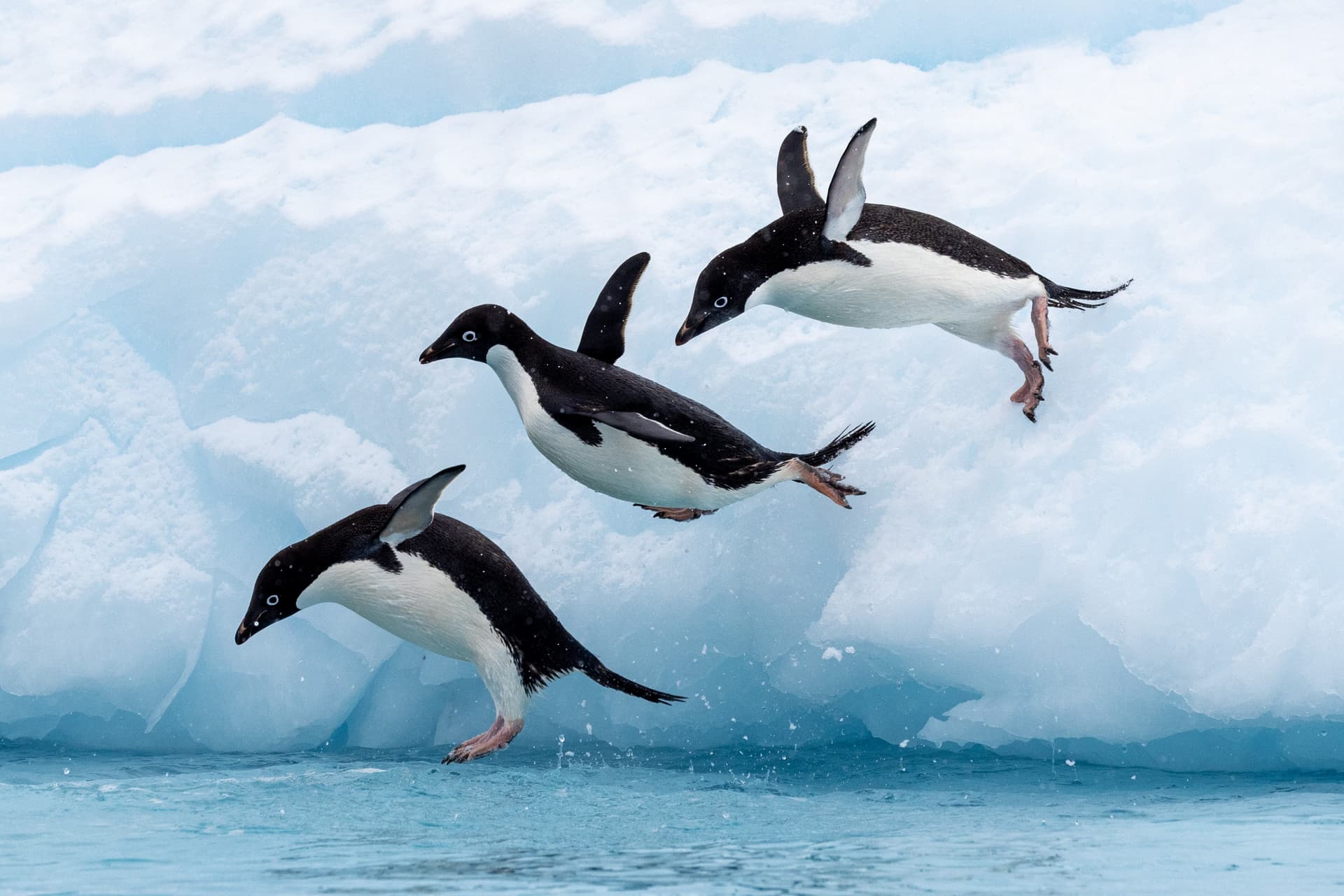
Dans un récent reportage du Financial Timesl'historien d'Oxford, écrivain et hôtelier Peter Frankopan revient sur son voyage avec Swan Hellenic en Antarctique à bord du SH Vega. Partant d'Ushuaïa vers les îles Malouines, la Géorgie du Sud et la péninsule Antarctique, il explore l'héritage de Shackleton, les vestiges des stations baleinières de Géorgie du Sud, les colonies de manchots, les baleines et les icebergs de toutes formes et tailles. L'article saisit ce qui fait de l'Antarctique une destination si puissante : éloigné géographiquement, mais profondément connecté au monde que nous habitons tous, il est l'un des principaux moteurs du système climatique terrestre.
« Mon Dieu ! quel endroit affreux », écrivit Robert Falcon Scott le 17 janvier 1912 après avoir atteint le pôle Sud. Le verdict de Scott fut sans doute en partie influencé par le fait que lui et sa petite équipe avaient trouvé une tente laissée par l'explorateur norvégien Roald Amundsen, ainsi qu'une lettre adressée à Haakon VII, roi de Norvège, que Scott fut prié poliment d'envoyer comme preuve que les deux hommes avaient atteint le centre du septième continent du monde.
Pour la plupart d'entre nous, l'Antarctique est une vaste étendue glacée et reculée, foyer des manchots, d'une petite communauté de scientifiques et lieu où les explorateurs d'hier et d'aujourd'hui se poussent jusqu'à leurs limites. Il peut être plus vaste que l'Australie et représenter environ une fois et demie la superficie des États‑Unis, mais il paraît insignifiant et comme un endroit où rien ne se passe.
Cette impression est renforcée par le fait que l'Antarctique fut l'une des dernières grandes frontières de l'exploration humaine. Bien que certaines affirmations prétendent que des gens en atteignirent les rivages au début du XIXe siècle, le premier débarquement universellement accepté sur le continent antarctique n'eut lieu qu'en 1895, lorsqu'un groupe norvégien de chasseurs de baleines accosta. Jusqu'à ce moment, le continent était resté hors de portée des marins, marchands, colons et empires — un lieu désolé de glaciers, de terrains austères et de vents hurlants.
Pourtant, cette perception est terriblement trompeuse. L'Antarctique est l'un des grands moteurs du système climatique de la Terre : l'immense couche de glace contient environ 70 % de l'eau douce mondiale, tandis que la congélation de l'eau de mer au large de ses côtes contribue à actionner les courants océaniques profonds qui redistribuent chaleur, oxygène et nutriments à travers le globe. Les changements en Antarctique résonnent bien au‑delà de l'océan Austral, influençant le niveau des mers, les régimes météorologiques, les écosystèmes marins et la stabilité du climat sur chaque continent.
Il n'est donc peut‑être pas surprenant que l'Antarctique abrite des dizaines de stations de recherche exploitées par trente nations différentes, dont beaucoup collectent et analysent des données d'une grande valeur pour suivre le changement climatique — fournissant des alertes précoces sur des basculements aux implications planétaires. Ces dernières années, les scientifiques se sont montrés particulièrement inquiets de la stabilité de la plateforme glaciaire qui fait office de contrefort et retient le glacier Thwaites, certains rapports suggérant que Thwaites pourrait perdre jusqu'à 200 milliards de tonnes de glace par an au cours des quarante prochaines années. Comprendre si, quand et comment cela pourrait se produire n'a jamais été aussi crucial.
Une nouvelle frontière s'ouvre, ce qui signifie qu'il n'y a pas que des chercheurs qui se rendent aujourd'hui en Antarctique. Une nouvelle génération de navires de croisière à coques renforcées et aux capacités de brise‑glace a commencé à emmener des voyageurs dans l'océan Austral, le long de la péninsule Antarctique et, dans certains cas — généralement en fonction des conditions météorologiques — plus au sud, jusqu'au cercle polaire antarctique.
J'ai voyagé à bord du SH Vega, un navire somptueusement aménagé avec un équipage irréprochable et un ensemble complet d'experts qui donnaient chaque jour des conférences sur la géologie de la région polaire, sur les effets de la chasse à la baleine et sur l'âge héroïque de l'exploration polaire. Les vols long‑courriers et les paquebots de croisière entretiennent une relation délicate avec les impacts environnementaux ; c'est pourquoi une grande importance a été accordée à la compréhension de la fragilité de l'écosystème antarctique et aux responsabilités liées à sa visite, chaque passager ayant été informé en détail des règles environnementales strictes qui régissent le tourisme en vertu du Système du Traité sur l'Antarctique.
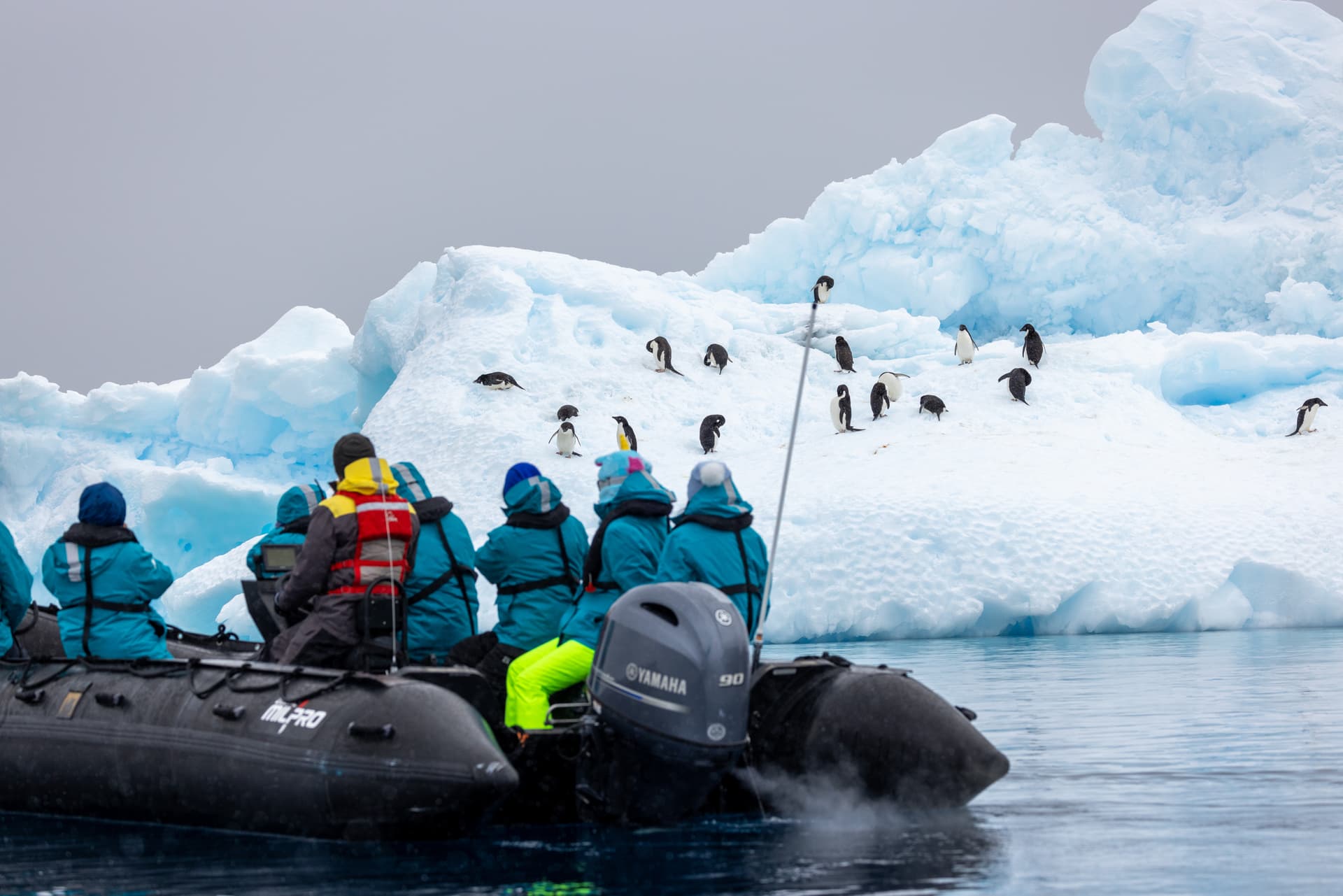
Nos vêtements, bottes et équipements étaient méticuleusement inspectés et désinfectés avant chaque débarquement afin d'empêcher l'introduction de graines, de terre ou d'agents pathogènes tels que la grippe aviaire, et nous étions étroitement surveillés lorsque nous étions à terre : priés de garder nos distances avec la faune, interdits de nous accroupir près des manchots de peur qu'ils nous prennent pour une partie du paysage et ne s'approchent trop, et tenus de ne laisser absolument aucune trace de notre présence. À bord également, on nous rappelait sans cesse que l'Antarctique n'est pas une destination comme une autre, mais un continent qui est (de manière unique) protégé par un accord international exigeant un soin exceptionnel de la part de tous ceux qui ont la chance de le visiter.
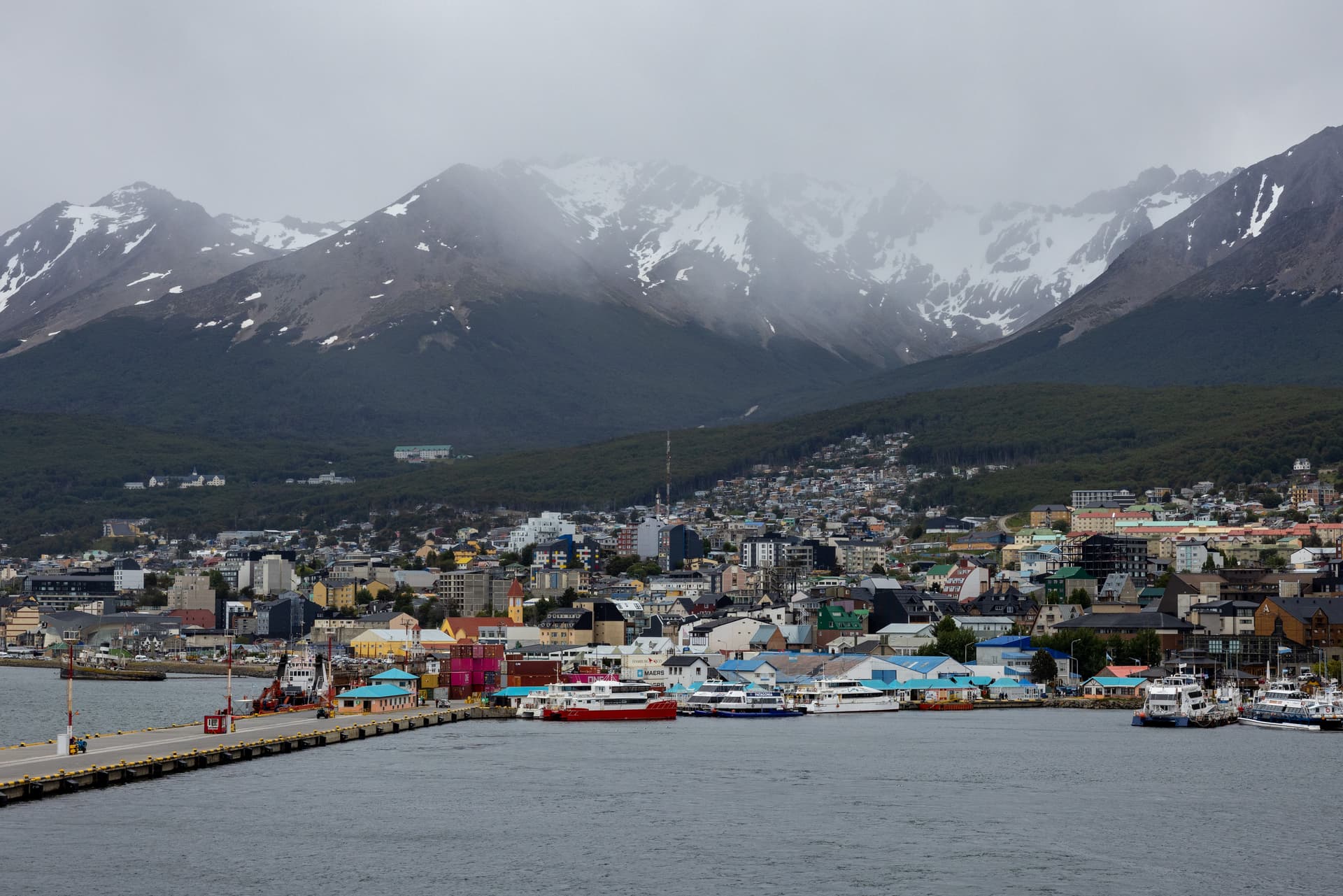
Nous sommes partis d'Ushuaïa en Argentine, la ville la plus australe du monde, descendant le canal Beagle, nommé d'après le navire qui emmena le jeune Charles Darwin lors d'un voyage qui transforma notre compréhension du monde naturel. Nous avons d'abord mis le cap sur les îles Malouines, faisant escale en premier à l'île West Point pour observer des albatros nichant aux côtés d'une colonie de manchots macaroni, avant de poursuivre jusqu'à Port Stanley — élevée au statut de ville en 2022 — avec ses cabines téléphoniques rouges, ses boîtes aux lettres Royal Mail, des produits Waitrose dans une boutique locale et une pinte ou deux au Victory Bar.
De là, nous avons traversé vers la Géorgie du Sud en passant près des Shag Rocks qui émergeaient de façon étrange à travers la brume — deux jours en mer difficile où la houle monta jusqu'à six mètres, quelque chose que le navire a mieux supporté que certains passagers. Le premier arrêt fut Stromness, une ancienne station baleinière de l'époque où l'île constituait un maillon clé du réseau mondial qui chassait et transformait les baleines pour produire des marchandises servant à éclairer les rues des villes en Europe et en Amérique du Nord, lubrifier les machines d'usine et rigidifier corsets, soutiens‑gorge, cols et parapluies.
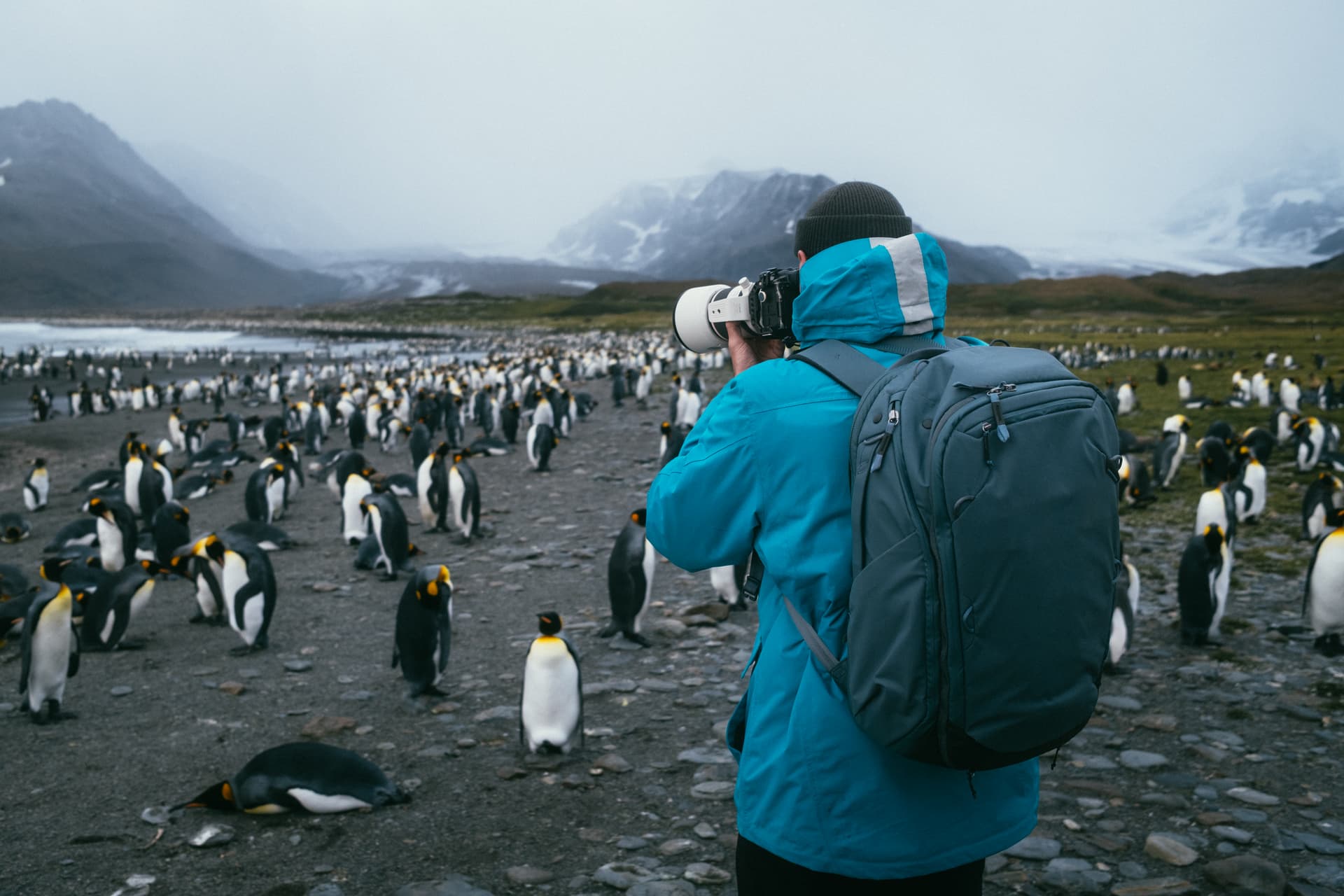
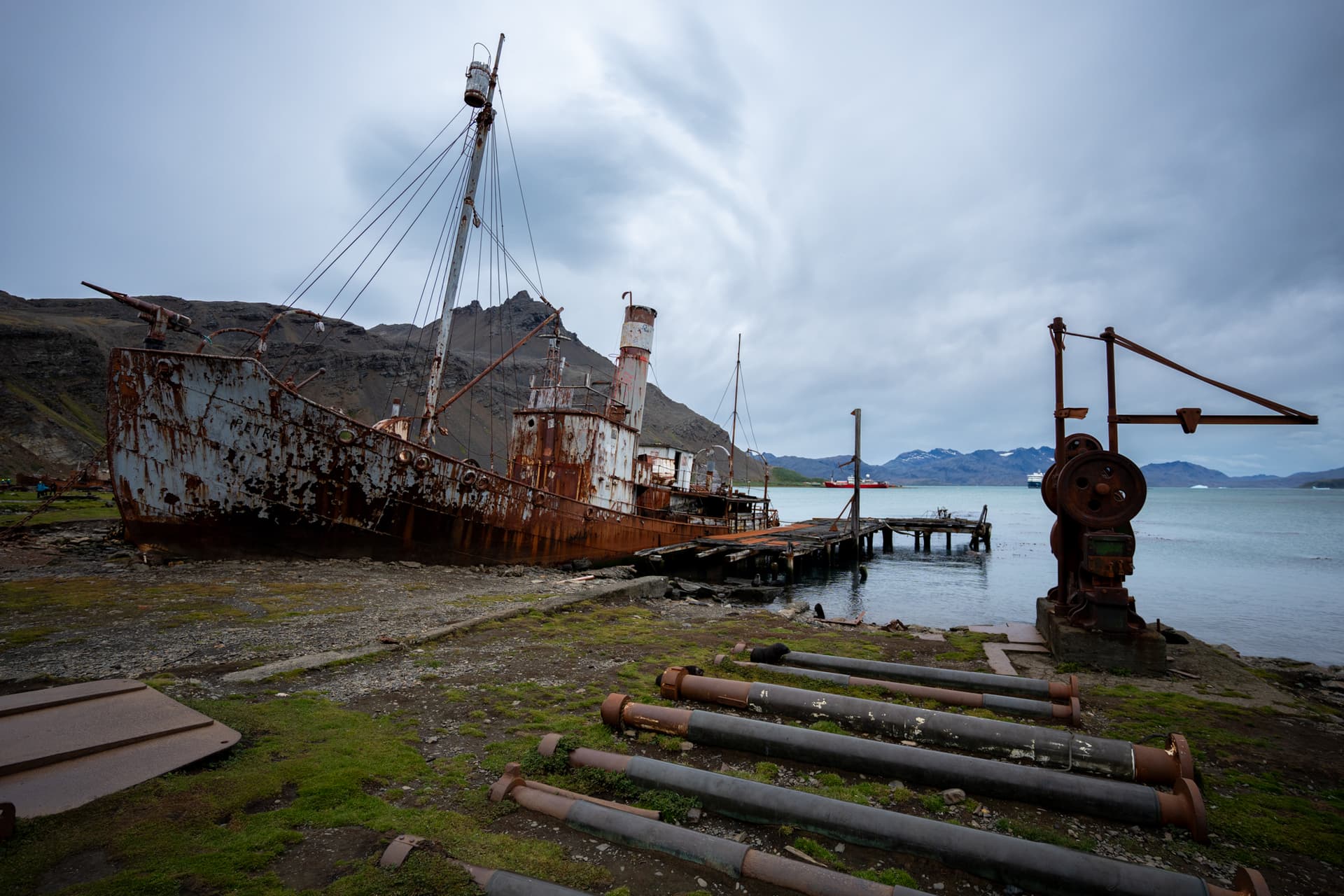
L'industrie a laissé un souvenir obsédant à travers la Géorgie du Sud ainsi que sur d'autres îles de l'Atlantique Sud et de l'océan Austral. Les stations baleinières abandonnées ressemblent à des décors de film d'horreur, avec d'immenses tuyaux rouillés, grues et chaudières qui transformaient la graisse, la viande et les os en huile — aujourd'hui envahis par des colonies d'otaries à fourrure, de manchots royaux et d'oiseaux marins. Le paysage de la Géorgie du Sud est extraordinaire, avec d'immenses glaciers se jetant dans la mer et d'énormes montagnes dominant des havres naturels comme Stromness et Grytviken.
Grytviken est le lieu de repos de Sir Ernest Shackleton, dont le leadership, le courage et la détermination firent de lui l'un des explorateurs polaires les plus célèbres de l'âge d'or des expéditions en Antarctique au début du XXe siècle. Son incroyable odyssée est digne d'une légende : quand l'Endurance fut prise puis écrasée par la banquise en 1915, Shackleton et ses hommes abandonnèrent le navire et finirent par gagner l'île Éléphant en canots de sauvetage, une région peu engageante, reculée et morne des îles Shetland du Sud. De là, ils entreprirent le trajet jusqu'à la Géorgie du Sud avec cinq hommes d'équipage, dont Frank Worsley, qui sut naviguer avec une habileté miraculeuse. Lui et deux compagnons durent ensuite franchir d'imposantes montagnes et glaciers pour atteindre Stromness et trouver de l'aide, avant de revenir secourir leurs hommes — qui survécurent tous.
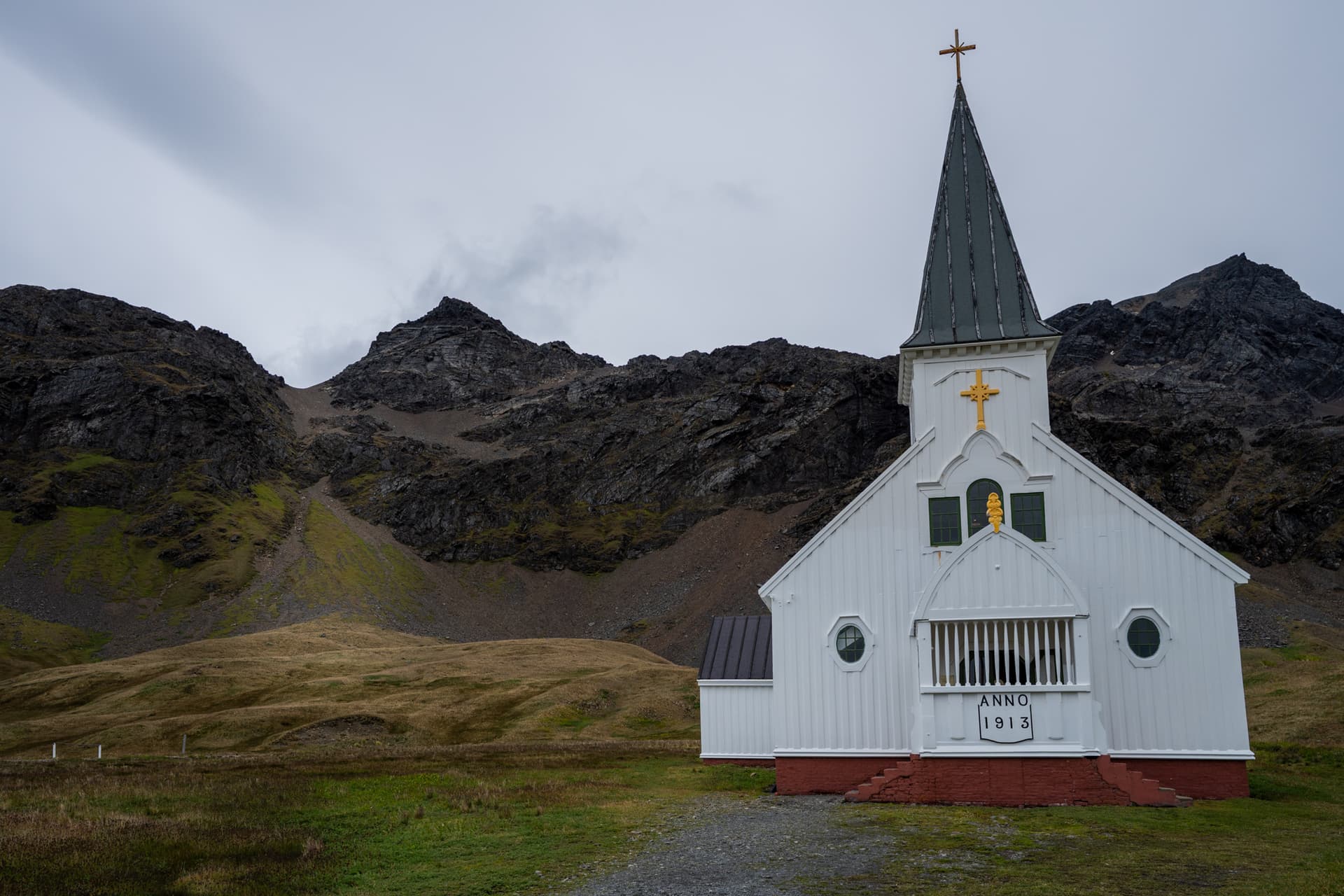
Après une belle cérémonie commémorative dans l'église de Grytviken — construite par des baleiniers norvégiens il y a un siècle — nous avons mis le cap vers le sud, dans le cercle polaire antarctique, dans des mers exceptionnellement calmes, d'autant que l'océan Austral est non seulement notoirement traître, mais peut changer rapidement : notre calendrier n'aurait pas pu être meilleur, car lorsque nous avions accosté à Grytviken et trouvé refuge dans le port, les vitesses du vent autour de la Géorgie du Sud figuraient parmi les plus fortes n'importe où sur Terre ce jour‑là.
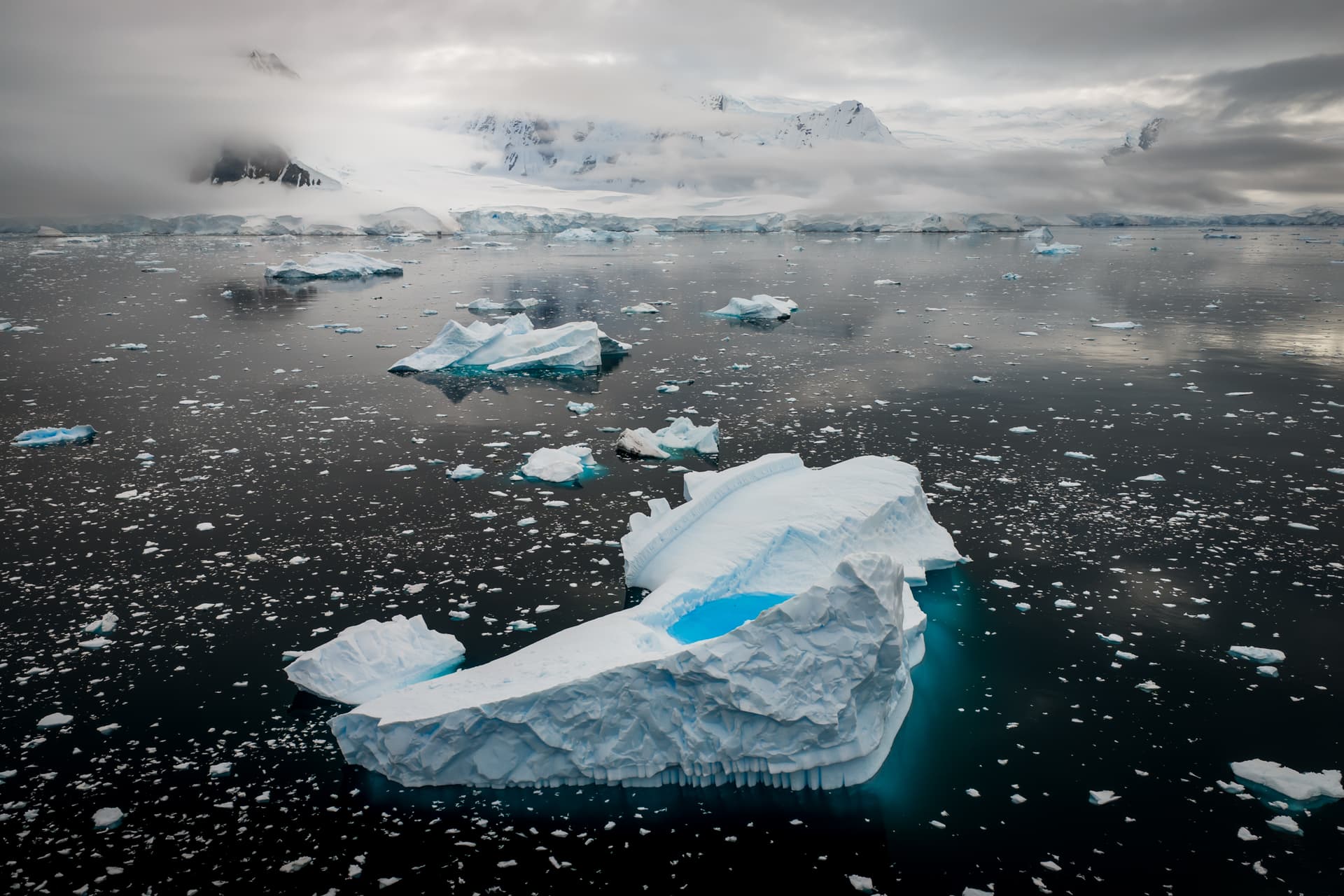
Nous atteignîmes les champs de glace au cœur de la nuit et fûmes réveillés — d'abord terrifiés — par le bruit de la glace se brisant et étant repoussée par la coque. Au matin, le soleil brillait dans un ciel d'un bleu éblouissant et la mer était redevenue plate. Nous longions des icebergs aux formes et tailles variées, d'un blanc étincelant à la surface, chacun présentant des nuances de bleu différentes en dessous. Nous en vîmes beaucoup de la taille de montagnes colossales à la dérive, sculptés par le vent et la mer en arches, falaises et tours — puis d'immenses dalles anguleuses et géométriquement parfaites qui semblaient avoir été taillées net dans une falaise.
Charles Wilkes, un premier visiteur de l'Antarctique dans la première moitié du XIXe siècle, décrivit le passage à côté d'immenses icebergs « tabulaires » comme la traversée « d'une immense cité de palais d'albâtre en ruine », avec « d'énormes piles de bâtiments groupés ». Une description de ces gigantesques icebergs rectangulaires « peut difficilement transmettre la réalité à l'imagination de celui qui n'a pas été parmi eux. »
Chacun présentait couche après couche de fines bandes bleues et blanches, chaque bande marquant des épisodes successifs de chutes de neige comprimées au fil des siècles et, dans bien des cas, des millénaires en glace glaciaire dense. Lorsque l'on visite un musée, on ressent le passé autour de soi ; ici, dans l'océan Austral, on sent l'immensité du temps géologique.
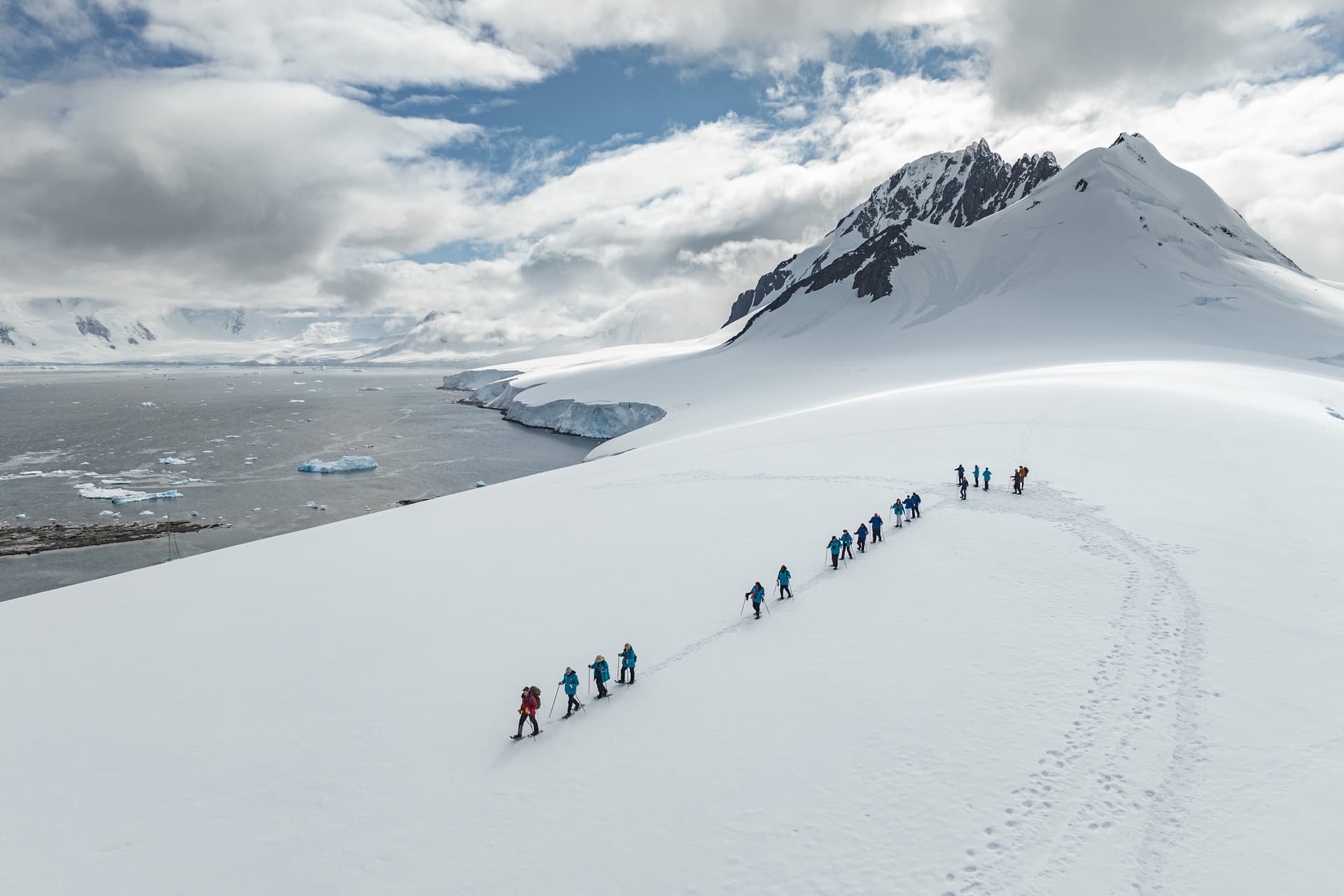
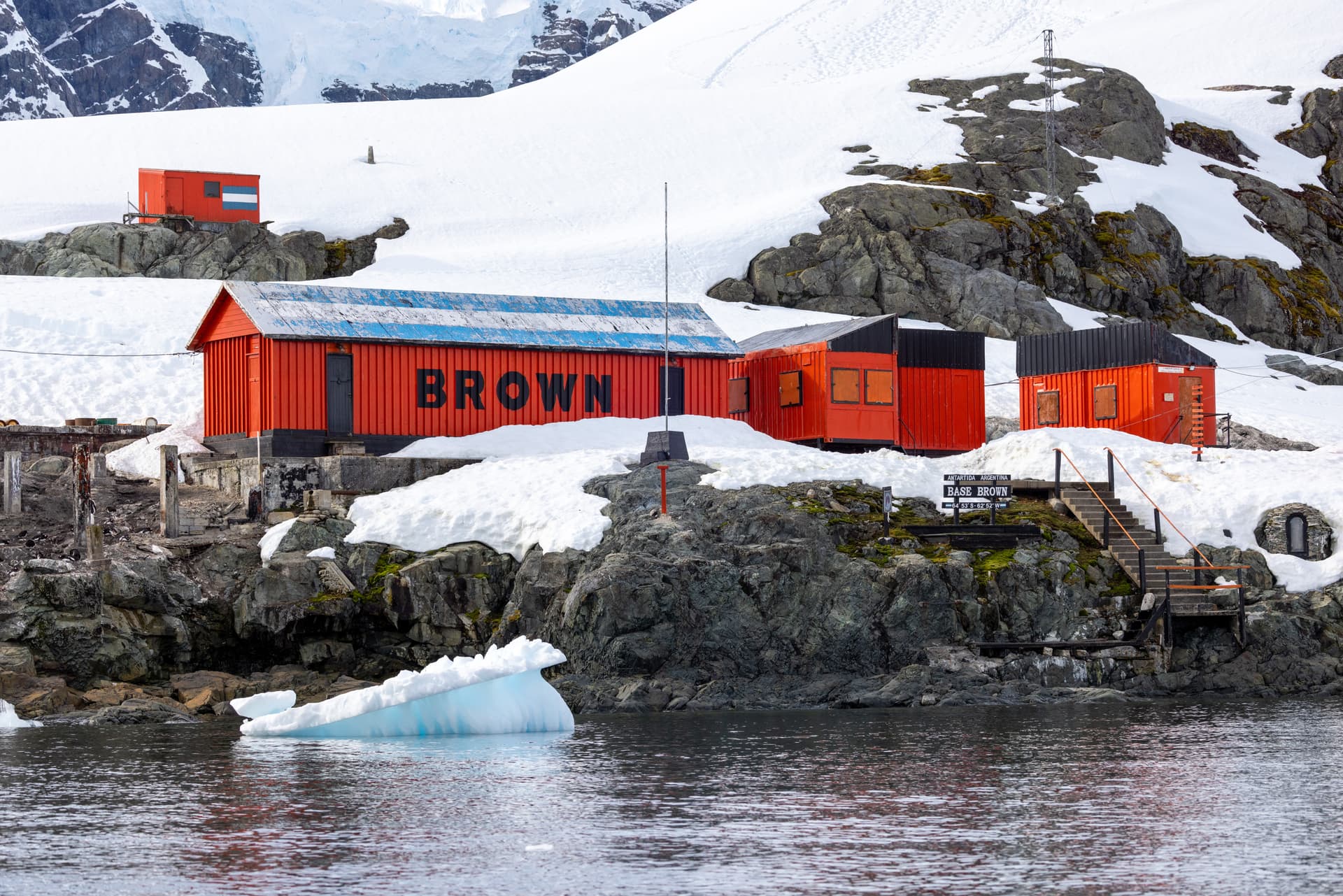
Une fois arrivés en Antarctique, nous avons débarqué à Brown Bluff, une baie flanquée de deux glaciers. Par une journée ensoleillée et éclatante, il fut solennel de fouler ces rivages, d'autant que si peu de personnes l'ont fait. Après tout, ce n'est qu'à la toute fin du XIXe siècle que le premier débarquement entièrement documenté en Antarctique eut lieu. À l'époque, les scientifiques n'étaient pas encore certains de savoir si la glace recouvrait un archipel ou un vaste continent.
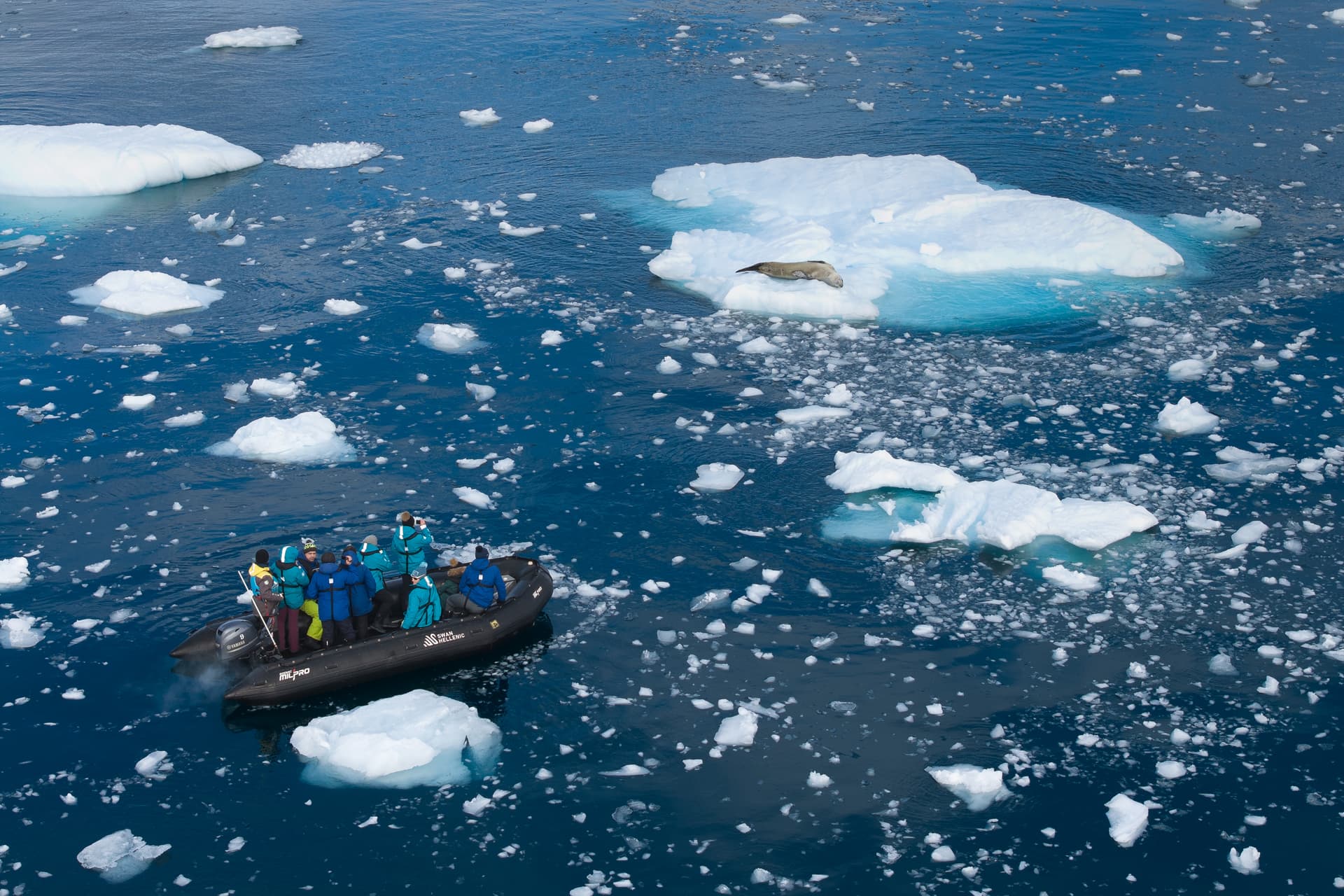
Nous avons ensuite gagné Hope Bay, que nous avons explorée en petits zodiacs qui crissaient en traversant la glace, avant d'accoster à Charlotte Bay, où nous avons eu le bonheur d'observer des dizaines de baleines se nourrir. Certaines vinrent s'approcher pour nous examiner, suscitant des exclamations : ces créatures majestueuses sont merveilleuses. La mégafaune peut rappeler avec force l'importance de la biodiversité, le respect de l'environnement naturel et la destruction que l'humanité a infligée par le passé en transformant des paysages et des écosystèmes sans tenir compte des conséquences.
En ce sens, l'Antarctique est lui‑même une anomalie, un lieu rare exempt de conflits, où l'on n'a pas combattu pour le contrôle des ressources, du territoire ou de l'influence. En fait, comme l'énonce le Traité sur l'Antarctique de 1959, il est « dans l'intérêt de toute l'humanité que l'Antarctique continue d'être utilisé exclusivement à des fins pacifiques et ne devienne pas le théâtre ni l'objet de discordes internationales ». Ce sont de belles paroles — et, de surcroît, elles ont tenu pendant plus de six décennies.
La question de savoir si cela continuera d'être le cas est légitime. Malgré les paroles d'espoir sur la coopération et la solidarité — renforcées par un protocole signé en 1998 qui désigna l'Antarctique comme « réserve naturelle consacrée à la paix et à la science » — le traité originel n'a pas résolu les revendications qui se chevauchent ou se concurrencent formulées par sept États — le Royaume‑Uni, la Norvège, l'Australie, la Nouvelle‑Zélande, la France, le Chili et l'Argentine. De plus, il existe des pays, tels que les États‑Unis, qui ont officiellement déclaré disposer d'une « base pour revendiquer un territoire » en Antarctique à l'avenir.
L’une des raisons est d’accéder à l’immense richesse minérale que l’on prête au continent — même si, pour l’instant, l’exploitation de ressources naturelles y est interdite. Une autre est que toutes les recherches scientifiques dans cette région ne se concentrent pas sur le réchauffement climatique : les régions polaires sont cruciales pour les opérations satellitaires, la surveillance du climat spatial et les communications mondiales. Il en résulte qu’au cours des dernières années, l’Antarctique a connu une nette augmentation de l’attention et des investissements dans des stations terrestres sophistiquées.
L’importance que Pékin accorde à sa présence en Antarctique a, par exemple, été soulignée par nul autre que Xi Jinping, qui a mis en avant la station Qinling dans son discours du Nouvel An 2025 comme l’une des réalisations nationales emblématiques de la Chine, la plaçant aux côtés de grands succès d’ingénierie et scientifiques comme preuve de la détermination du pays à « explorer les étoiles et les océans. »
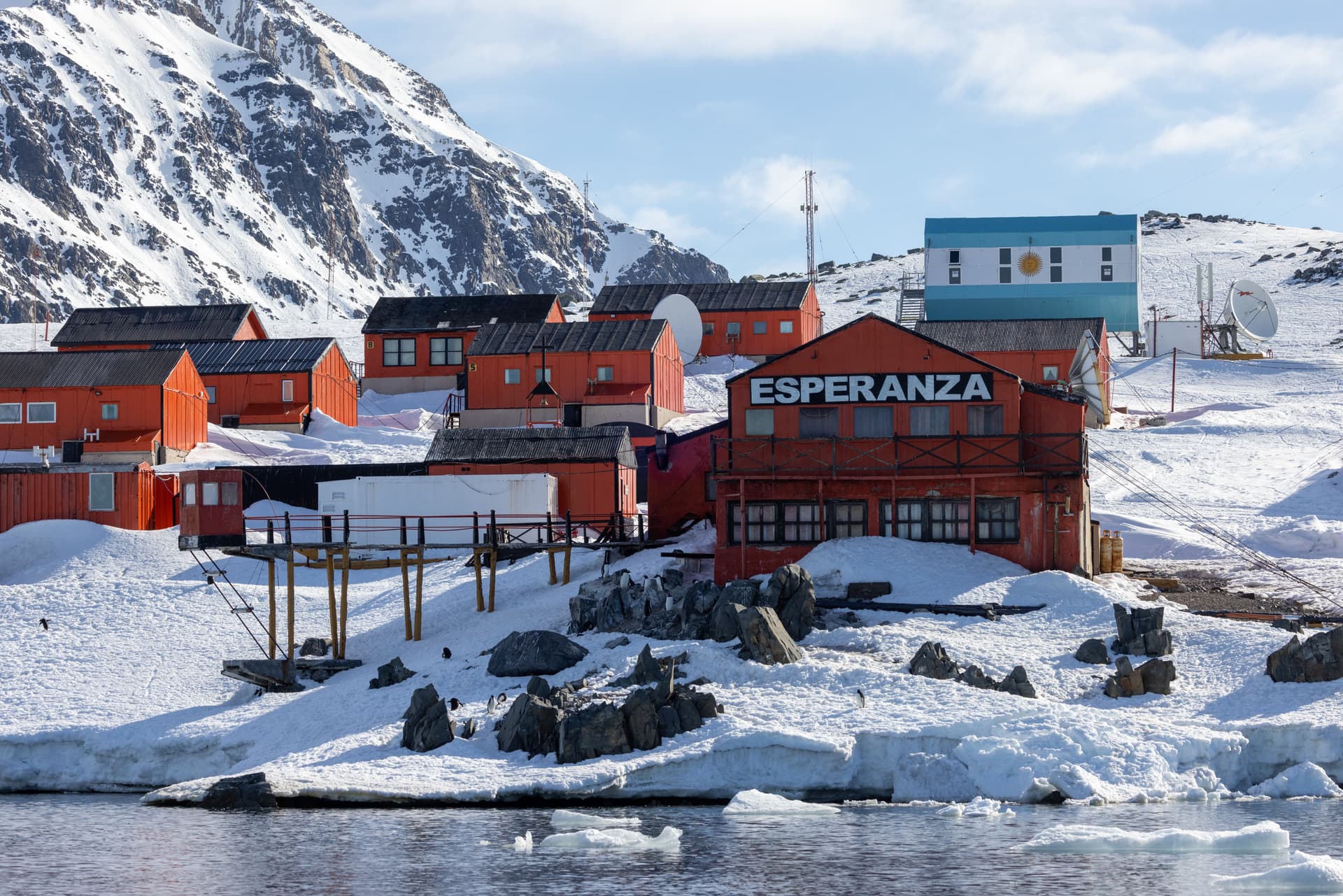
Après être passés devant la station de recherche Esperanza en Argentine — lieu du premier accouchement humain enregistré en Antarctique — nous avons mis le cap sur l’Île Déception, l’un des deux volcans encore actifs du continent. Après être entrés dans la caldeira inondée, nous avons débarqué à la Baie des Baleiniers, dépassé une autre installation industrielle abandonnée et des logements délabrés, puis gravi le point le plus élevé pour profiter d’un panorama spectaculaire. Nous sommes retournés à bord quelques heures avant l’horaire prévu afin de devancer une météo qui se refermait rapidement.
Beaucoup de passagers redoutaient le passage de Drake, l’un des bras de mer les plus redoutables au monde. Nous n’avions pas à nous inquiéter, même lorsque les houles se sont accentuées — grâce à un équipage attentif et imperturbable, et à un navire équipé des dernières technologies pour maintenir la coque stable face aux crêtes et aux creux des vagues.
Alors que nous sirotions un dernier verre de vin en naviguant de retour dans le canal Beagle, il était difficile de ne pas méditer sur les merveilles du monde naturel : des énormes éléphants de mer qui se battent sur les plages de la Géorgie du Sud aux mères et petits de baleines franches qui roupillent pendant que nous pagayons à leur côté, des icebergs tabulaires de l’océan Austral à la pensée des générations d’explorateurs polaires, passés et présents, qui ont contribué à révéler davantage de ce continent si étrange.
Après 17 jours en mer, nous avons enfin accosté à Ushuaia. Les régions polaires ont constitué une part importante de mes recherches pendant près d’une décennie, en partie en raison de leur importance pour comprendre à la fois les causes et les conséquences du réchauffement climatique, mais aussi du fait de leur rôle croissant dans les nouvelles rivalités et compétitions géopolitiques qui se déroulent dans un monde traversant une période de profonds changements.
L’Antarctique peut donner l’impression d’être au bout du monde ; la réalité est qu’il se trouve bien plus près du centre de notre avenir que la plupart d’entre nous ne l’imaginent. Je suis arrivé en pensant visiter l’un des endroits les plus reculés de la Terre. Je suis reparti en me demandant s’il n’est pas, en fait, l’un des plus centraux.
Peter Frankopan est professeur d’histoire globale à l’Université d’Oxford