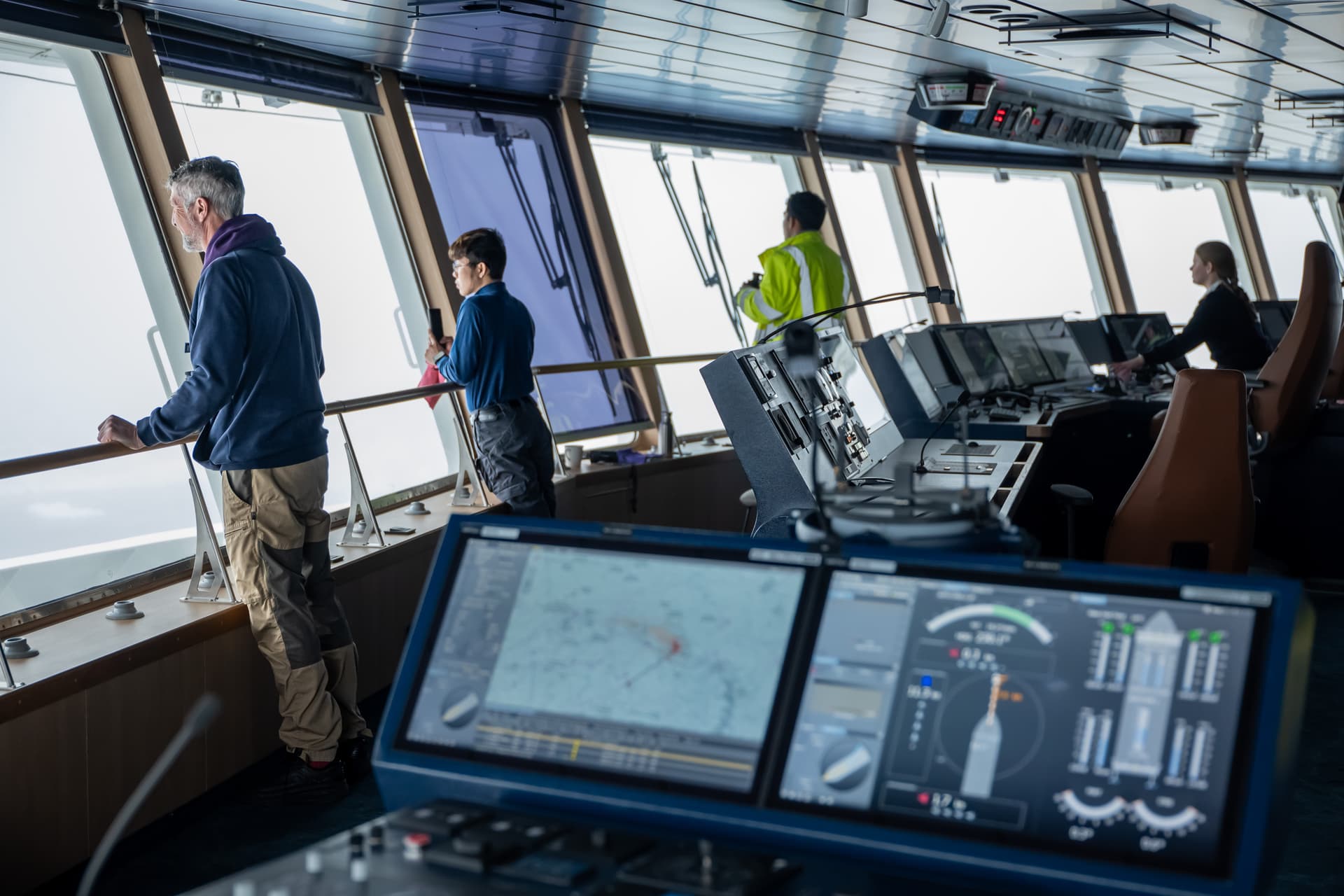
Yes. Modern cruise ships are built and operated around layered safety systems, international rules, trained crews and rehearsed emergency procedures. That does not make any voyage risk-free: weather, illness, accidents and crime occur at sea as they do anywhere else. What matters is how each of those risks is prevented, detected and managed.
The layers are not interchangeable. A storm is handled through navigation and ship operation; a fire through detection, containment and trained response; illness through sanitation, reporting and isolation; a security incident through access control and shoreside authorities. Understanding which system covers what is more informative than treating safety as a single guarantee.
What rules make cruise ships safe?
The central international framework is the International Convention for the Safety of Life at Sea, usually called SOLAS. The International Maritime Organization develops and maintains the convention, flag states certify ships against it, and port states may inspect vessels calling at their ports. SOLAS covers construction, fire protection, navigation, communications, life-saving appliances, emergency instructions and drills.
The IMO creates international standards but does not operate or police individual ships. Flag administrations hold primary responsibility for implementation and certification, often delegating surveys to recognized organizations such as classification societies, while port states may inspect foreign ships calling at their ports. A ship is therefore subject at once to the law of its flag state, to international conventions, and to the controls of every country whose ports it visits.
Trade associations add a further layer that is often mistaken for regulation. Cruise Lines International Association policies bind its members and may exceed legal requirements, but they are industry commitments rather than law.
National legislation adds another. The US Cruise Vessel Security and Safety Act applies only to qualifying vessels within its defined size and US-port scope, covering vessel design, crime reporting, emergency medical treatment and preservation of evidence. It is not a worldwide cruise law.
Are there police on cruise ships?
Cruise ships do not carry a conventional public police force. They employ trained security personnel, and the master holds authority over safety, order and shipboard operations. Security teams can respond to incidents, control access, preserve evidence and protect passengers, but criminal jurisdiction belongs to government authorities.
Which authority becomes involved depends on the ship’s flag, the location of the incident, the ports involved and the nationalities concerned. On qualifying US-related voyages, the Cruise Vessel Security and Safety Act sets reporting and victim-assistance requirements, and US agencies may become involved.
Report suspected crime or threatening behavior immediately rather than at the end of the voyage. Preserve messages, photographs and other evidence, and ask for written confirmation of how the incident has been recorded and which authority has been notified.
Are cruise ships safe in storms and rough seas?
Ships are planned and operated with weather as a primary input. Masters and bridge teams use forecasts, navigational warnings and route information to change speed, course or timing as conditions require, which is why a published itinerary is always subject to change on safety grounds.
Stabilizers reduce rolling and improve comfort, but they do not cancel waves or make a ship immune to severe weather. Size, hull form, loading and sea state all affect motion. Follow movement restrictions, keep clear of closed decks and use handrails when the ship is working.
Swan Hellenic’s purpose-built expedition fleet adds features suited to remote operation. SH Minerva and SH Vega have PC5 ice-strengthened hulls and SH Diana has a PC6 hull. All three were built in full compliance with SOLAS Safe Return to Port requirements, which Swan Hellenic describes as including separate engine rooms and a secondary bridge, so that guests and crew can remain aboard while the ship returns to port under her own power. An ice class describes construction and capability in defined ice conditions. It is not permission to enter unsafe ice or to override the master’s limits.
Do cruise ships have doctors?
Many oceangoing cruise ships carry medical staff and a medical center, though the facility is not a shoreside hospital. Oceangoing CLIA member lines carrying 100 or more persons on board on itineraries to international waters agree to meet or exceed the American College of Emergency Physicians’ health care guidelines for cruise ship medical facilities. These cover facilities, staffing, equipment and procedures, and are built around emergency care, stabilization and evacuation where necessary.
Swan Hellenic ships feature a modern medical facility overseen by an experienced doctor, supported by our medical services partner, VIKAND. For certain remote voyages, guests may be required to provide a fitness-to-travel certificate, which is completed via a VIKAND health questionnaire.
The limits are real. Serious illness or injury may require diversion, evacuation or transfer at the next suitable port, and that takes longer in remote regions. Treatment is normally billed as private care abroad rather than covered by a national health system. Bring adequate medication, disclose relevant conditions and hold travel health insurance that includes repatriation.
Do cruise ships have enough lifeboats?
Passenger ships on international voyages must carry certified life-saving appliances under SOLAS. The full arrangement may combine enclosed lifeboats, rescue boats, liferafts and marine evacuation systems rather than one visible lifeboat seat per person. Capacity, location, launching arrangements, maintenance and crew training all form part of the ship’s certification.
SOLAS also requires muster lists, emergency instructions, passenger briefings and drills, with equipment kept operational, maintained and inspected. Your muster station is the place assigned to you in an emergency; it is not necessarily beside the craft you would eventually board. Pay attention to the alarm signal, the route and the attendance procedure even when the briefing is delivered digitally, because a familiarization that feels routine at embarkation is what allows passengers to move quickly without improvising.
Lifejackets are carried for everyone aboard, with additional provision for children and watchkeepers. In an emergency, the safest response is to follow the crew and the instructions issued for that specific situation rather than choosing your own route or collecting belongings.
How safe are polar expedition ships?
Polar voyages add hazards a warm-water itinerary never encounters: ice, extreme cold, limited charts and communications, long distances from search-and-rescue support, and equipment that must function at low temperatures. The IMO Polar Code addresses these through mandatory requirements under SOLAS and MARPOL.
The code covers design, construction, equipment, operations, crew training, search and rescue, and environmental protection. A ship operating within its scope requires a Polar Ship Certificate and a Polar Water Operational Manual describing its operating capabilities and limitations.
Industry associations add operational standards without being regulators. IAATO is a member association for Antarctic operators and AECO performs a comparable role in Arctic expedition cruising. Swan Hellenic is a member of IAATO and a Full Member of AECO. IAATO members coordinate itineraries, participate in vessel tracking, maintain contingency plans and follow established procedures for Antarctic activity.
A small ship does not remove the realities of remote travel. Its advantage is that the vessel, the expedition team and the operating plan are all designed around them. Safety comes from respecting limits: weather cancels landings, ice changes routes, and the expedition leader can stop an activity while guests are still keen to proceed.
Frequently asked questions
Are cruise ships safe compared with other forms of travel?
Direct comparisons are difficult, because transport modes record exposure and incidents in incompatible ways. Cruise ships operate under extensive maritime regulation, but no responsible comparison should imply zero risk or rest on unlike statistics.
Is there a doctor on board a cruise ship?
Many oceangoing ships carry a doctor and nursing staff in a shipboard medical center equipped for emergency care and stabilization. It is not a hospital, so serious cases may require diversion, evacuation or treatment ashore, and care is normally billed as private treatment abroad.
Are cruise ships safe for children?
They can be, where the child meets the operator’s age and participation rules. Check lifejacket availability, medical limitations, supervision requirements and whether the child can safely take part in tenders, Zodiacs or shore activities.
What happens if illness spreads on a cruise ship?
Ships use reporting, isolation, cleaning and outbreak-response procedures. Within its jurisdiction, the CDC Vessel Sanitation Program inspects ships, monitors gastrointestinal illness, investigates outbreaks and publishes inspection and qualifying outbreak information. The visibility of those reports is not evidence that every illness began aboard, since passengers and crew can carry infections onto the ship. Report symptoms promptly, wash hands thoroughly and follow isolation instructions.
What happens during a medical emergency far from land?
The medical team assesses and stabilizes the patient while the master and shoreside specialists weigh diversion, evacuation or treatment at the next suitable port. Remote itineraries make insurance, medical disclosure and fitness-to-travel requirements especially important.