July is the strongest all-round month for an Alaskan cruise: the warmest temperatures, the fullest excursion schedule and reliable daylight. June offers the longest days and excellent whale activity, August pairs active wildlife with a mature summer landscape, and May and September often bring lower fares and fewer visitors.
No month guarantees clear skies, calm seas or a particular sighting. Alaska’s season runs on several natural calendars at once: daylight, rainfall, salmon runs, whale migration and glacier access. Choose by priority rather than by looking for a universal best.
Alaska cruise season explained
The main season runs from May through September, though a small number of departures now operate in April and October. Inside Passage itineraries typically call at Juneau, Ketchikan and Skagway, while Gulf of Alaska routes continue toward Seward or Whittier and often connect with an inland extension.
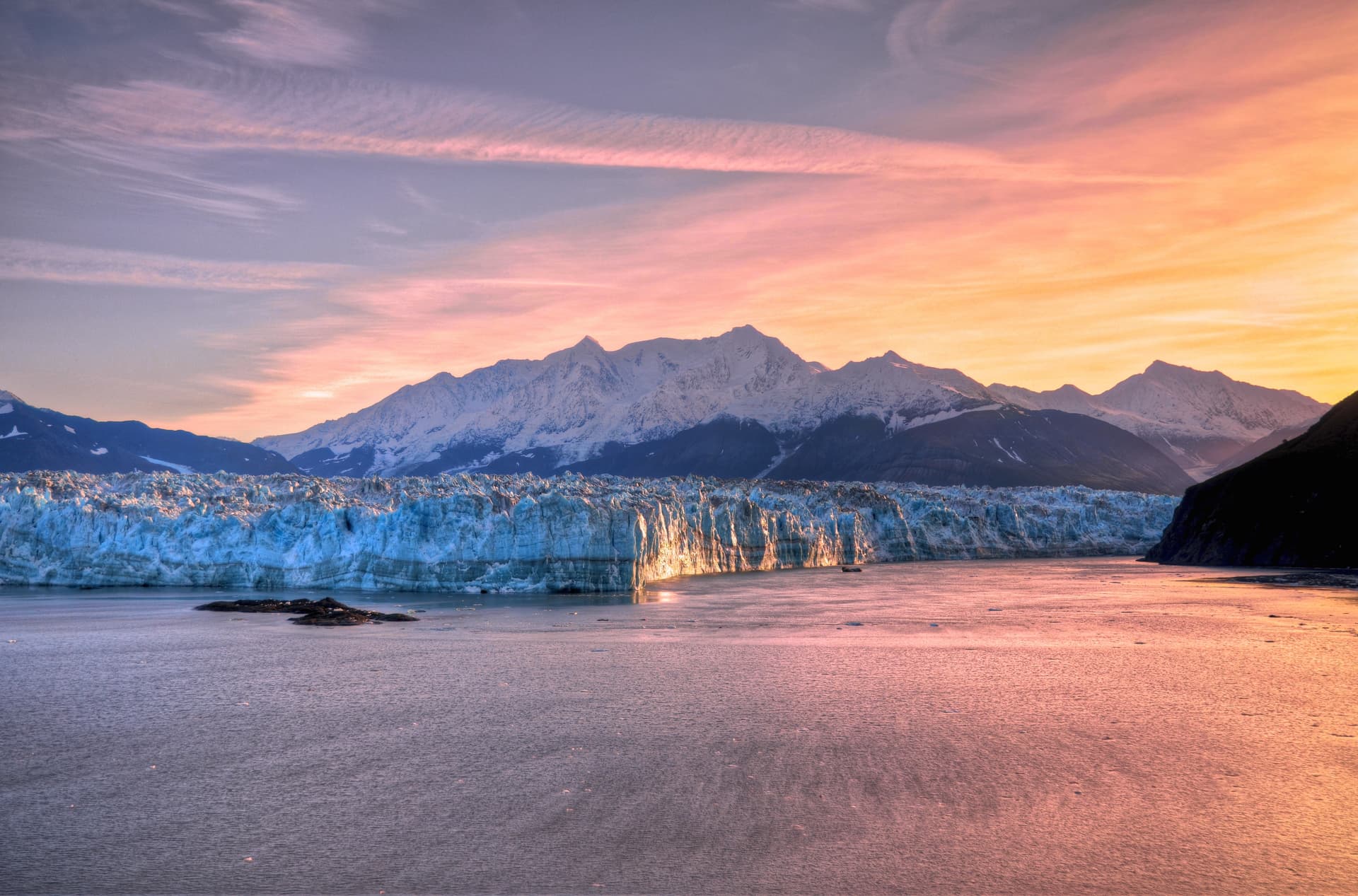
Glacier access depends entirely on the route. Glacier Bay National Park limits and authorizes commercial vessel entry, so a voyage marketed as a glacier cruise does not necessarily enter Glacier Bay. Other itineraries visit Hubbard Glacier, Tracy Arm or Endicott Arm instead. Compare the named route rather than the brochure category.
The edges of the season feel genuinely different from midsummer. May holds snow on the mountains and cooler conditions at sea. By June and July, daylight is near maximum and seasonal services are fully operating. August remains firmly summer but grows wetter in Southeast Alaska. September brings shorter days, cooler nights and a distinct shoulder-season character.
Cheapest time to take an Alaskan cruise
May and September often offer lower starting fares than peak summer because they sit at the edges of demand, and ports feel quieter than they do in July. Neither month is automatically cheapest, however: cabin inventory, ship, itinerary, promotion and departure port frequently outweigh the calendar.
Separate price from value before committing. A low fare on a one-way itinerary can be offset by more complicated flights and transfers, and a discounted cabin does not compensate for missing the excursions you most wanted. Compare the fare, airfare, hotel nights, transfers and planned shore experiences together.
Best months for wildlife
Wildlife follows food, migration and local conditions rather than the cruise calendar. Sightings are never guaranteed, but the seasonal patterns are consistent enough to guide a decision.
Humpback whales arrive at Alaska’s feeding grounds in spring and remain through summer and fall. The Alaska Department of Fish and Game identifies June and July as particularly good for observing bubble-net feeding, while whale-watching operations in Southeast Alaska commonly report reliable viewing from May through September.
Bear viewing is far more location-specific. Coastal bears may be visible at many points in the season, but concentrations at salmon streams depend on the timing of the local run. At Brooks River in Katmai, numbers are highest in July as salmon migrate upriver, and rise again in September when spawned-out fish provide easy pickings. That pattern should not be applied mechanically to every port or excursion.
Salmon timing varies by species and river, running across the summer and into fall, which is why wildlife opportunities can differ between two July itineraries. Anyone planning a dedicated bear or salmon excursion should check the specific location rather than relying on a statewide month.
Temperature and daylight by month
Alaska is too large for a single weather table. The figures below use Juneau as a practical reference for Southeast Alaska, where many cruises spend most of their time. An exposed deck, a glacier approach or an inland Denali extension can feel considerably colder.
May. Normal daytime highs around 14°C (58°F), nights around 5–7°C (low 40s°F). Daylight grows from roughly 16 hours to nearly 18 across the month.
June. Highs around 17°C (62°F), lows around 8°C (47°F). Near the solstice, Juneau receives about 18 hours of direct daylight with long twilight beyond that.
July. Highs around 18°C (64°F), lows near 10°C (50°F). Daylight remains close to 18 hours early in the month and gradually shortens. July remains one of the warmest months, but Southeast Alaska’s relatively drier period tends to come earlier; cloudiness and the chance of rain begin increasing after mid-July.
August. Highs around 17°C (63°F), lows around 9°C (49°F). Daylight falls from more than 16 hours at the start of the month, and rainfall becomes more prominent in Southeast Alaska.
September. Highs near 13°C (56°F), lows near 7°C (44°F). Daylight drops quickly, from roughly 14 hours toward about 12 at the equinox. Waterproof layers become essential.
These are planning averages, not forecasts. A cold, wet July day and a bright September afternoon are both entirely ordinary.
Month by month: what each one is best for
May. A quieter shoulder season with snow still on the peaks and long days without midsummer demand. Whales are returning to feeding areas, but some seasonal tours and inland services run limited schedules.
June. Maximum daylight, active waterfalls and strong whale watching. The landscape is turning fully green and long evenings make the light on deck particularly rewarding.
July. Warmest temperatures, the widest range of excursions and the fullest visitor services. Also peak demand, so popular cabins and tours cost more and sell earlier.
August. Salmon-linked wildlife, mature summer scenery and broad excursion availability, with shortening days and a rising chance of rain later in the month.
September. Lower fares, fewer visitors, fall color and a genuine chance of dark skies. Cooler, wetter and less predictable, with some businesses and excursions closing for the season.
Northern lights on an Alaska cruise
The aurora is not a realistic expectation during the brightest part of the season. Aurora activity occurs year-round, but high-latitude summer skies are too bright for it to be visible. By late August and September, darkness returns and sightings become possible under clear skies, though no itinerary can promise them. If the aurora is your main objective, plan a land stay with several nights rather than depending on one evening aboard.
Applying the same logic to other high latitudes
Swan Hellenic does not currently operate Alaska itineraries, but the reasoning transfers directly to the regions it does sail. Its Arctic voyages run through the northern summer and its Antarctic program follows the southern summer, because in both cases light, ice and wildlife decide the operating window rather than the other way round. Whichever high-latitude destination you choose, the method is the same: pick the period whose conditions match the experience you value most, and accept the compromise that comes with it.
Frequently asked questions
What is the best month for an Alaska cruise?
July, for most travelers: the warmest weather, long daylight and a full range of excursions. June is better for maximum light and whale activity, while May and September suit those prioritizing value and quieter ports.
When does the Alaska cruise season run?
May through September, with a limited number of departures in April and October.
What is the cheapest month for an Alaska cruise?
May and September often offer lower starting fares than peak summer. The actual cheapest departure depends on ship, route, cabin and remaining inventory.
When is the best time to see whales on an Alaska cruise?
Humpbacks may be seen from spring through fall. May through September offers opportunities across Southeast Alaska, with June and July particularly associated with bubble-net feeding.
Can you see the northern lights on an Alaska cruise?
Possibly on a late-August or September sailing under a dark, clear sky, but not reliably. Peak-summer nights are too bright, and no cruise can guarantee aurora activity or cloud-free conditions.