Usually not. Many cruise lines prohibit personal garment steamers as heat-producing electrical appliances, and travel irons appear on the same prohibited-items lists, either as banned items outright or as appliances that may not be used in guest cabins. Policies are not identical across the market, so check the current prohibited-items page for your operator and ship rather than assuming a compact or low-wattage model will be treated differently.
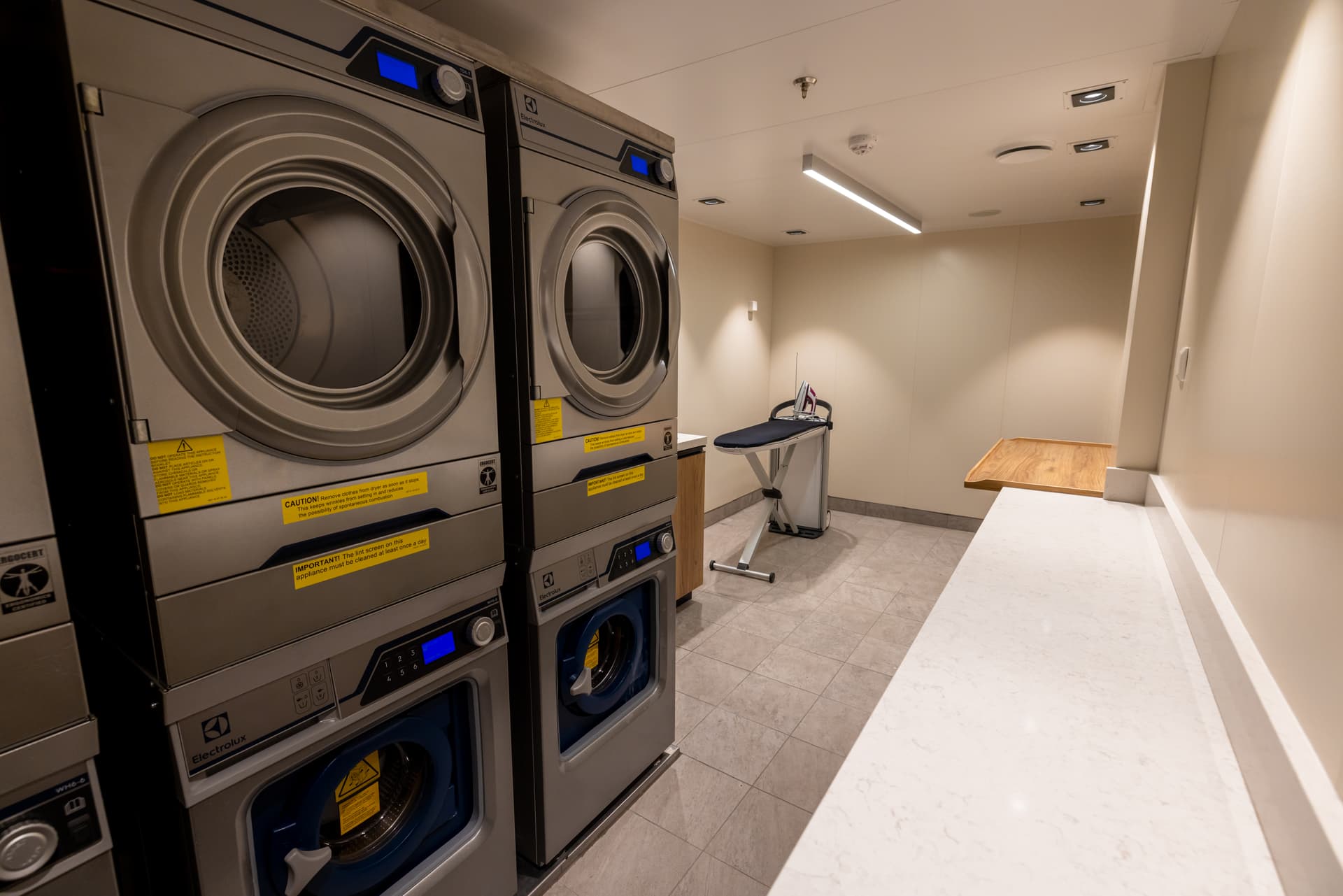
Swan Hellenic’s public packing guidance tells guests to leave irons at home as there are ironing boards and irons in the washroom, additionally they can have these done for them at a fee.
Why steamers and irons are restricted
The concern is fire prevention. A clothes steamer or travel iron contains a heating element designed to reach high temperature. In a cabin it is likely to be used near bedding, curtains, clothing and soft furnishings, and it stays hot after it is switched off.
Ship-safety regulation is built around preventing ignition, detecting fire quickly and containing it at source. Cruise lines therefore restrict appliances that produce heat, steam or a flame, even where the same product is unremarkable in a house. The policy is not a prediction that any particular steamer will fail. It removes an avoidable ignition source from hundreds or thousands of private rooms where crew cannot supervise how appliances are used.
Wattage does not settle the question. Steamers marketed as compact, dual-voltage or low-wattage still fall within the prohibited category on many lines, and some operators list steam-producing appliances as a separate prohibited class alongside irons, precisely to close that gap.
Hair appliances are often treated differently. Many lines permit curling irons, straighteners and approved hair dryers despite the heat they generate. Those are narrow, deliberate exceptions rather than evidence that a garment steamer is acceptable. Do not improvise with a straightener as an iron either: it marks fabric, transfers hair-product residue and creates exactly the handling problem the policy exists to prevent.
What happens if security finds a steamer
Cruise luggage is screened before or during embarkation. If security identifies an appliance that appears prohibited, the bag is usually held for inspection rather than delivered to the cabin.
The process varies by operator, though the pattern is a familiar one. A questionable or locked bag may be sent to a designated screening area where the guest is asked to open it. Prohibited electrical items are commonly retained for the duration of the voyage, sometimes against a receipt, and returned at disembarkation. Luggage delivery to the cabin can be delayed until late on embarkation day as a result.
Do not assume every retained item comes back. Operators distinguish between ordinary prohibited appliances and items considered illegal, dangerous or flammable, which may be disposed of or passed to authorities. Security also retains discretion over equipment that is not specifically named but appears unsafe.
The practical consequence is usually inconvenience rather than penalty: delayed baggage, a trip to the screening area and time spent recovering the item at the end of the cruise. Airline permission is no protection here. An appliance accepted in checked or carry-on baggage on a flight may still be refused at the cruise terminal.
Alternatives that actually work
The best alternative begins before departure, with what you pack rather than what you do about it later.
Choose fabrics that travel. Knits, technical fabrics, textured weaves and blended shirts recover far better than rigid linen or heavily structured formalwear. Avoid bringing a garment that demands perfect pressing unless the dress code genuinely requires it.
Pack to avoid hard folds. Rolling suits casual items; a packing folder keeps shirts and dresses flatter. Do not overfill packing cubes, since compression saves space but sets deep creases. Unpack and hang everything soon after boarding rather than leaving it compressed.
Use bathroom humidity, carefully. Hanging a garment in the bathroom during a normal hot shower can relax light wrinkles, though it will not reproduce the pressure or concentrated steam of an appliance. Do not run a shower purely to make steam, and never hang clothing from a sprinkler head, smoke detector or other safety fitting.
Wrinkle-release spray. A commercial spray helps on many washable fabrics. Test it on an inconspicuous area first, follow the care label and check it is acceptable under the operator’s liquids policy. A slightly damp cloth and careful hand-smoothing works on cotton and blends.
Use the ship’s facilities. Where a self-service laundry room includes fixed irons and boards, use only that equipment and follow the posted instructions. Other ships offer paid pressing through a valet service instead. A mid-voyage wash and a careful hang often does more for a creased garment than pressing would, and self-service rooms are usually quietest early in the day or while the ship is in port.
On a Swan Hellenic expedition voyage the problem is smaller than it would be on a traditional formal-night cruise. The onboard dress code is relaxed, and practical, presentable clothing is more useful than anything needing a flawless finish. That does not answer the appliance question, but it does mean a sensible packing plan can avoid depending on one.
Onboard laundry and pressing services
Arrangements differ by line and ship. Some vessels have self-service rooms with washers, dryers and fixed ironing stations. Others rely entirely on a paid valet service for washing, dry cleaning or pressing. Turnaround times and charges vary, and both tend to tighten near the end of a voyage as demand rises.
On Swan Hellenic cruises there is a 24/7 self-service laundry, The guests can self-press their clothes using the ironing boards in the washrooms, or have these done by the house-keeping staff at a fee.
For most travelers the reliable plan is straightforward: pack crease-resistant combinations, unpack promptly, and use the ship’s approved facilities if something needs more attention.
Frequently asked questions
Why are steamers not allowed on cruise ships?
Many operators treat personal steamers as heat-producing electrical appliances and prohibit them to reduce avoidable ignition risk in cabins. The wording varies between lines, so check the current prohibited-items list for your ship.
Can you bring an iron on a cruise?
Usually not. Clothing irons are widely prohibited in guest cabins. Some ships provide fixed irons in designated self-service laundry rooms, while others offer paid pressing instead.
What happens if a steamer is found in cruise luggage?
If a prohibited steamer is detected, the bag may be held for inspection and security may retain the appliance for the voyage. Return procedures vary by operator and local rules.
How do you remove wrinkles from clothes on a cruise?
Unpack and hang garments promptly, use bathroom humidity during a normal shower, smooth by hand, apply a suitable wrinkle-release spray, or use the ship’s approved ironing or pressing service.
Does Swan Hellenic have laundry facilities?
Current Swan Hellenic voyage inclusions list 24/7 self-service laundry. Confirm the exact facilities and any pressing service for your departure.