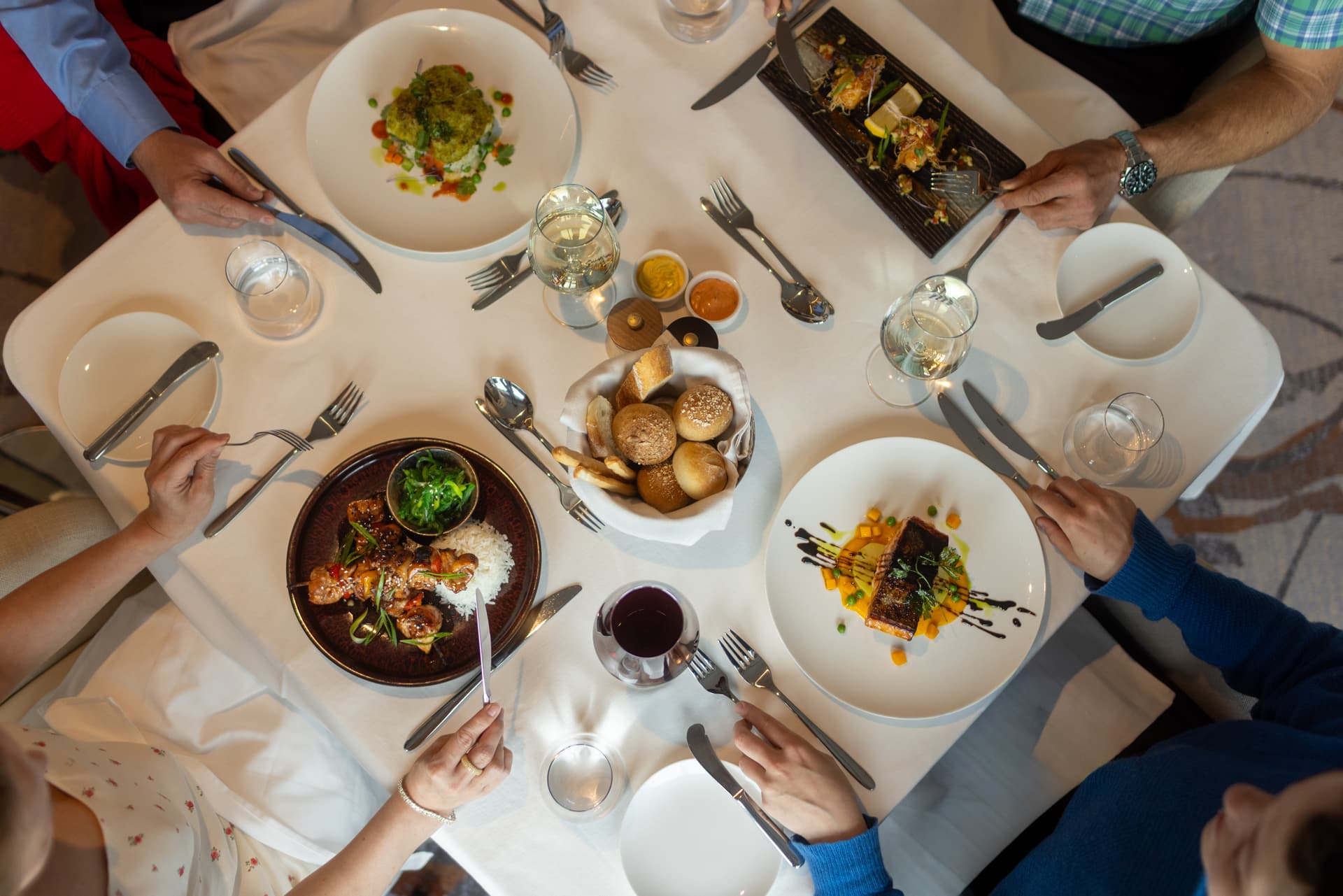
No cruise line has the best food for everyone. The honest answer is that dining at sea is organized around several different models, and the line with the best food for you is the one whose model matches how you actually eat and travel.
That sounds evasive until you look at what separates the models. A ship built around twenty included eateries and no fixed dinner time is solving a different problem from a small vessel serving 2-3 dining venues to 150 guests, and both are solving something different again from a resort ship offering a dozen surcharge restaurants. Judge the operating model rather than the restaurant count, and the question becomes answerable.
Six factors determine dining quality at sea. Almost every disappointing meal afloat traces back to one of them.
Cooking method and volume. A galley plating several thousand covers on a fixed schedule mostly cannot cook the way one serving a few hundred can. Made-to-order preparation, sauces finished at service and dishes fired individually depend on the ratio between guests and kitchen capacity, not on how many restaurant names appear in the brochure.
Provisioning and itinerary. Good dining on a remote route combines careful advance provisioning with realistic use of what can be obtained along the way. Ask how long the ship goes between resupply points, not whether the menu mentions local produce.
What the fare includes. A specialty restaurant matters less if it carries a supplement every time you use it. Compare the included main dining, casual venues and room service before treating a long restaurant list as a list of meals you have already paid for.
Seating and timing. Fixed seating, open seating, reservation systems and rotational assignment produce different evenings. Fixed seating suits travelers who want the same table and team each night; open seating suits those whose day ends unpredictably.
Service ratio. Guest-to-crew ratio shows up in the dining room faster than anywhere else. A technically ambitious menu still disappoints if the room feels rushed.
Dietary procedure. The useful question is not whether a line offers vegetarian, vegan or gluten-free menus, but whether it can describe in writing how it handles your requirements, including cross-contact.
The main cruise dining models
Most ships fall into one of these patterns, and recognizing yours narrows the search quickly.
Large-ship variety. Many venues, a mix of included and surcharge restaurants, and a wide range of styles. Strongest for choice and for groups with different tastes. Weakest for consistency, since quality varies from venue to venue and the base fare rarely covers the best rooms.
All-inclusive premium. Specialty restaurants, wines and in-suite dining folded into the fare. Strongest for travelers who dislike deciding whether each meal is worth an extra charge, though it usually comes with higher fares and a more formal service register.
Culinary-led. Cuisine treated as the central product rather than an amenity, generally on mid-size ships with a high proportion of made-to-order cooking. Strongest for travelers choosing a voyage primarily for the food. Less suited to families or to anyone wanting an active expedition program.
Flexible and adults-only. No assigned dinner times, no traditional main dining room or buffet, and a spread of included restaurant-style venues. Strongest for guests who dislike buffets and formality.
Family rotational. Guests move between themed restaurants while the same service team follows them through the voyage. Strongest for families, because servers learn children’s preferences and dietary information once rather than nightly.
Small-ship and expedition. Two to three dining rooms, open seating, menus organized around the day’s operations. Strongest for continuity and food that reflects the region being explored. Weakest for anyone wanting a different restaurant every night.
Matching the model to the way you travel
If food is the reason for the trip, prioritize made-to-order cooking, galley capacity per guest and the proportion of the fare that covers the good restaurants. Restaurant count is the least useful number available.
If you travel with children, look for continuity rather than range. A team that knows a child’s allergies by night four is worth more than a fourth themed venue.
If you are traveling with a serious allergy or a medically necessary diet, choose on procedure alone. The right line is the one that will put its handling process in writing before you book.
If the destination is the point, look for menus that respond to the itinerary and a dining schedule that bends around landings and wildlife rather than the reverse. Dinner at a fixed hour is a poor arrangement on a day when the light over a fjord is best at nine in the evening.
Dining on small expedition ships
Expedition dining operates under constraints that resort ships never encounter. The galley may be provisioning for weeks in remote waters, adjusting meal times around landings, or feeding guests who have just come in cold and wet from a Zodiac. Restaurant quantity matters less than whether the food stays varied, well prepared and appropriate to the day.
Swan Hellenic’s ships carry 152 or 192 guests. The main dining room serves breakfast, lunch and dinner. The main dining room operates an open seating policy, so guests eat when the day allows rather than at an assigned hour. The Club Lounge is open around the clock, with pastries and coffee, afternoon tea, tapas-style plates and freshly made pizza among its offerings. The alfresco Pool Grill & Bar covers daytime dining in good weather, and an in-room menu handles the rest. The itinerary genuinely influences ingredients and regional dishes in a way that is harder to achieve at volume.
Swan Hellenic curates its onboard dining through partnerships with renowned master chefs, including Italian culinary star Andrea Ribaldone and Korean chef Sang Keun Oh, who design the core fusion and regional menus. So, you can expect the combination of the rich heritage of cultural expedition cruising with gastronomic expertise.
Cruise dining for special diets
No line is universally best for allergies. The right choice depends on the specific allergen, the severity of the reaction, the remoteness of the itinerary and the operator’s procedures.
Notify the operator at or before booking, then confirm again after embarkation. Ask what documentation is required, whether menus identify allergens, how cross-contact is managed, which venues are safest and what happens on a day when the ship is far from resupply. Severe allergies should never be managed on the basis of a general website statement or a previous voyage’s arrangements.
Swan Hellenic caters to most dietary requirements, including vegetarian, vegan, diabetic and gluten-free. Guests should still raise specific requirements through the booking process at least 30 days prior to embarkation.
Questions to ask before you book
•Which restaurants are included, and which carry a supplement each time?
•Is dining open seating, fixed seating or rotational?
•How many guests does the galley serve, and how much is cooked to order?
•How does the ship provision on the route you are considering?
•What will the line commit to in writing about your dietary requirement?
•Does the dining schedule adjust around excursions, landings and daylight?
Frequently asked questions
Which cruise line has the best food?
There is no single answer, because lines optimize for different things: culinary identity, all-inclusive convenience, family continuity, flexibility or destination-led menus. Identify which of those matters most to you, then compare inclusions, cooking method and seating arrangements rather than restaurant counts.
Do luxury cruise lines include all dining?
Many include their main and specialty restaurants, but inclusions vary by line, ship and venue. Chef-led experiences, premium wines and private dining frequently cost extra, so read the current fare description rather than the marketing summary.
Is food better on small ships or large ships?
Neither is better as a category. Large ships offer more venues and styles; small ships serve fewer guests, which supports made-to-order cooking and a more consistent room. The right answer depends on whether you value range or continuity.
Which cruise line is best for food allergies?
The one that will explain its procedure in writing for your specific allergen. Contact the operator before booking, ask about cross-contact rather than menu options, and confirm arrangements again at embarkation.
How does dining work on a small expedition ship?
Usually, one main dining room with open seating, plus a casual venue and room service. Meal times are organized around the expedition schedule, and the emphasis falls on a personal dining-room atmosphere and regionally influenced menus rather than restaurant variety.