
Life in the water
Conserving the health and biodiversity of the seas we sail.
All of our Zodiac expeditions and excursions follow strict biosecurity protocols to keep any impact on the environment to a minimum, and fully comply with the standards of — and our obligations as members of — the International Association of Antarctica Tour Operators (IAATO) and the Association of Arctic Expedition Cruise Operators (AECO). Alongside these technologies and policies we run initiatives dedicated to the conservation of life in the water, conducted with guests in partnership with organisations such as Happywhale and The Secchi Disk Foundation.
Happywhale conservation research
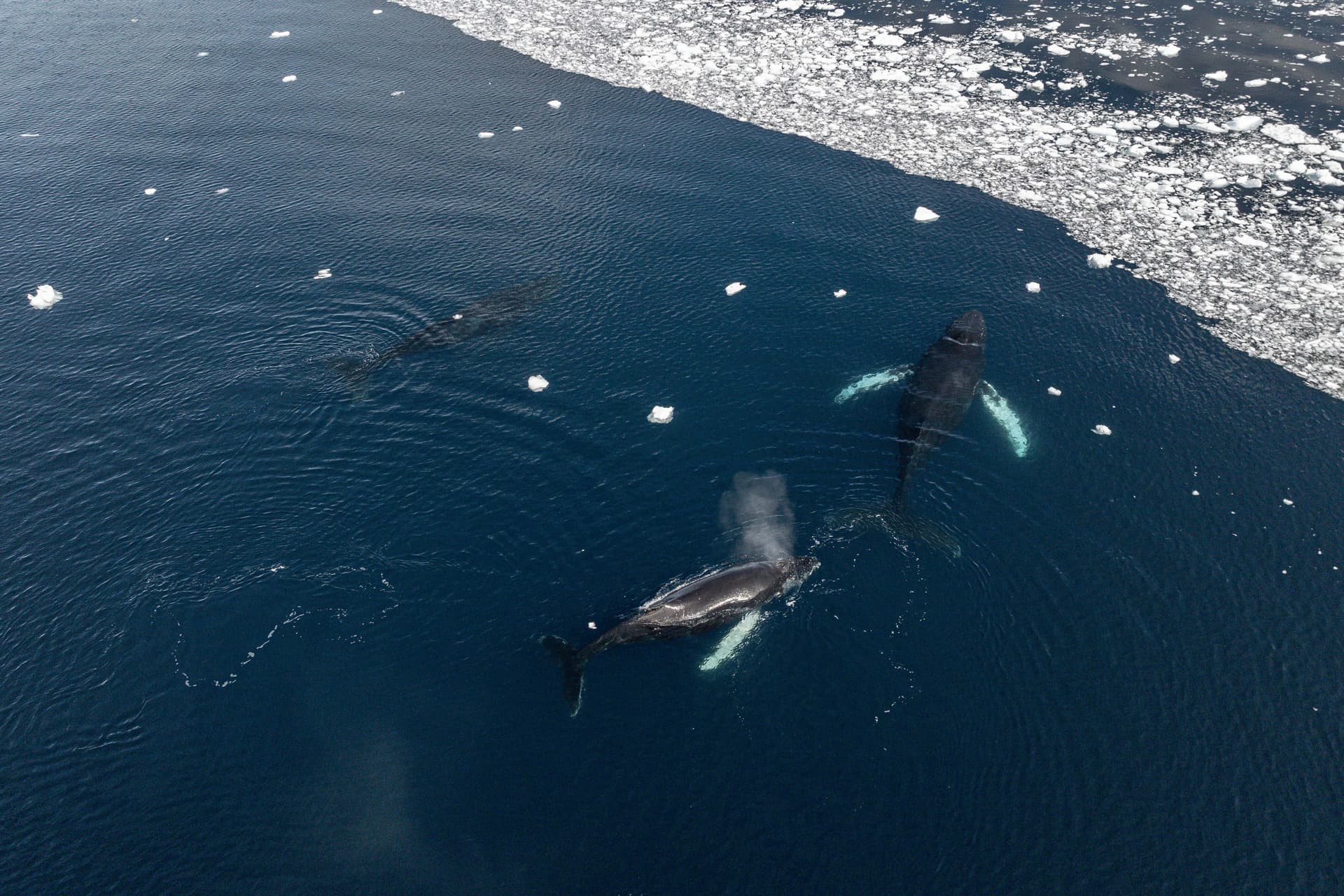
Happywhale aims to increase global understanding and care for marine environments. We work with them so our guests can become citizen scientists, contributing to global knowledge about whale numbers, behaviour and distribution. Every whale has a pattern on its fluke as unique as a human fingerprint, so geolocated photographs uploaded through the Happywhale app can identify each individual and track its movements around the world. A designated expedition leader on each voyage supports guests in taking and uploading high-resolution images.
The Secchi Disk Seafarer Study
The world's largest citizen science study of phytoplankton — the tiny plant-like algae that underpin the marine food chain. A Secchi Disk measures the clarity of seawater and the amount of phytoplankton at the surface: a simple but effective way to see how climate change is altering phytoplankton abundance and distribution. Guests work with a designated expedition leader to learn how to use the disk, then set off by Zodiac to take a water transparency measurement.
Zodiac expedition biosecurity
Every landing follows the biosecurity procedures set out by IAATO and AECO — cleaning and inspecting boots, clothing and equipment — so nothing travels between sites that shouldn't.